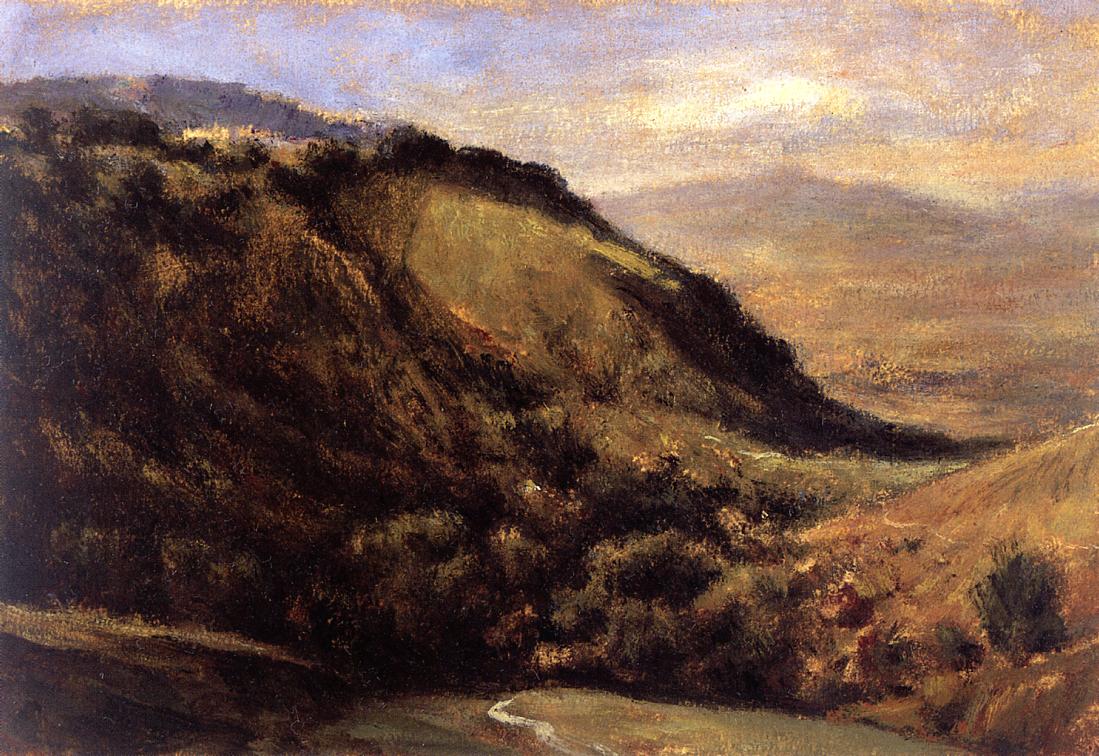
Theodore Rousseau
1812–1867 · French · 30 artworks
RealismBarbizon Schoolplein air paintingdetailed observationatmospheric perspectivetonal paintingnaturalistic color palette
artist bio
Théodore Rousseau was a leading figure in the Barbizon school of landscape painting, emphasizing direct observation and naturalism. He championed painting en plein air and capturing the subtleties of light and atmosphere in the French countryside, influencing later Impressionists.
related: Charles-Francois Daubigny, Gustave Courbet
30 artworks

Valley in the Auvergne
1830
difficulty

Twilight Landscape
1850
difficulty

View of the plain of Montmartre X effect of storm
1848
difficulty

Inside the forest
1857
difficulty

Seascape
1831
difficulty

The pond near the road
1848
difficulty

Valley in the Auvergne Mountains
1830
difficulty

Cows Returning from the Mountainside
1865
difficulty

Panoramic landscape
1833
difficulty

Mont Saint-Michel
1832
difficulty

Woman Carrying Wood
difficulty

Glade of the Reine Blanche in the Fontainebleau Forest
1860
difficulty

Landscape with poplars
1833
difficulty

The Forest of Fontainebleau
1867
difficulty

The valley of Bièvre near Paris
1831
difficulty

Edge of the Forest, Sun Setting
difficulty

Cottages in the Jura
1834
difficulty

A town Thiers
1830
difficulty

Market in Normandy
1848
difficulty

The End of Autumn
difficulty

Village in valley
1834
difficulty

Church of Saint Lou d'Esserant in the Oise
difficulty

A Hilly Landscape in Auvergne
1831
difficulty

A waterfall in Thiers
1830
difficulty

Hilly landscape, Auvergne
1830
difficulty

View of the belfry of Orleans
1852
difficulty

Landscape at Vigerie, valley Santoire, Auvergne
1830
difficulty

The Valley of Saint-Vincent
1830
difficulty

View of the Puy de Dôme and Royat
1839
difficulty

Malhec rocks in the Valley of Saint-Vincent
1830
difficulty