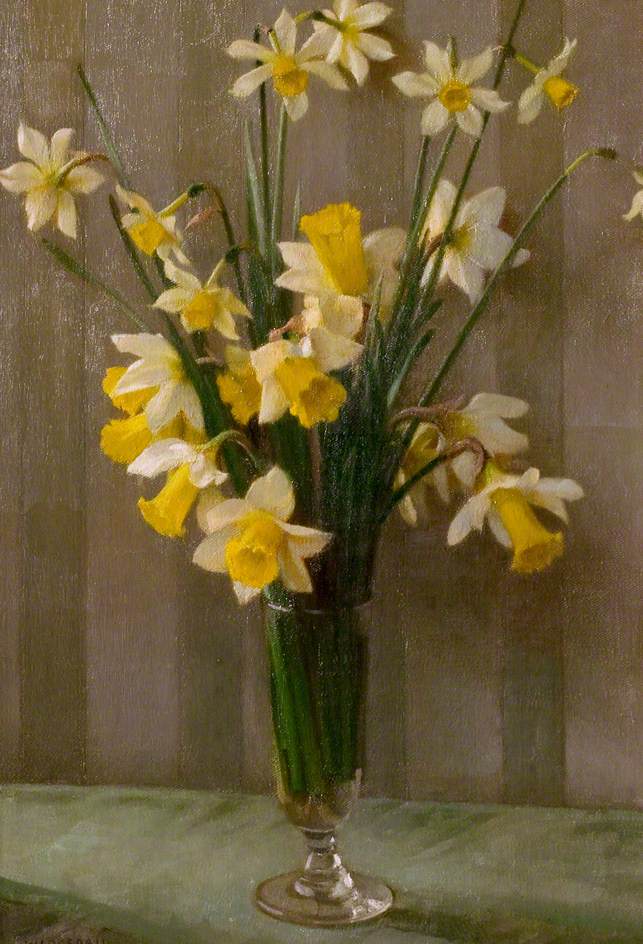
plate no. 4989
Daffodils
William Logsdail, 1935
study guide
est. 12 hrsapproach — 8 steps
- step 01
Sketch the basic shapes of the vase and the overall arrangement of the flowers.
- step 02
Block in the background with a light, neutral color, paying attention to the vertical stripes.
- step 03
Establish the main values of the flowers, differentiating between the yellow and white petals.
- step 04
Begin adding details to the flowers, focusing on the shapes of the petals and the centers.
- step 05
Paint the stems and leaves, using varying shades of green to create depth.
- step 06
Render the vase, paying attention to the reflections and refractions of light.
- step 07
Add highlights and shadows to create form and dimension.
- step 08
Refine the details and make any necessary adjustments to the composition.
color palette
primary · yellow ochre · titanium white · sap green · raw umber
secondary · cadmium yellow light · viridian · burnt sienna
Mix various shades of yellow by combining yellow ochre and cadmium yellow light with white. Create greens by mixing sap green and viridian with yellow. Use raw umber and burnt sienna to create the neutral background and shadows.
techniques
- ·color mixing
- ·layering
- ·blending
- ·rendering transparency
- ·observational drawing
common pitfalls
- →Overworking the details too early in the process.
- →Failing to accurately capture the subtle color variations in the flowers.
- →Making the vase appear opaque rather than transparent.
- →Ignoring the background and its effect on the overall composition.
materials
surface · stretched canvas
required
- ·stretched canvas
- ·acrylic or oil paints
- ·round brushes (sizes 2, 4, 6)
- ·flat brush (size 8)
- ·palette
- ·palette knife
- ·linseed oil or acrylic medium
- ·odorless mineral spirits or water
optional
- ·medium gloss
- ·retarder
Use a medium-grain canvas for best results. Consider using a limited palette to simplify the color mixing process.
tips & new artworks in your inbox
no spam — unsubscribe anytime.
or to save artworks, chat, and track progress
in this vein


