plate no. 0544
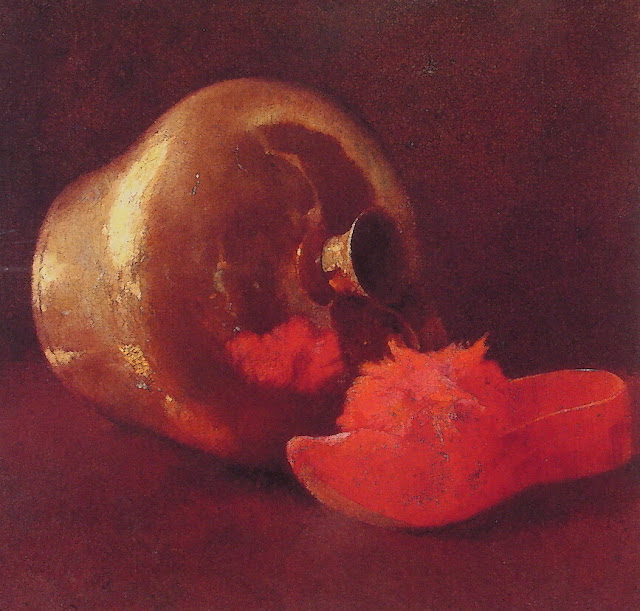
Ruby Reflection
Emil Carlsen, 1895
study guide
est. 10 hrsapproach — 8 steps
- step 01
Lightly sketch the basic shapes of the vessel and shoe, paying attention to their relative sizes and positions.
- step 02
Establish the background color with a mid-tone of reddish-brown.
- step 03
Block in the main color areas of the vessel and shoe, using slightly darker values than the highlights.
- step 04
Begin adding highlights to the vessel, observing the direction and intensity of the light source.
- step 05
Develop the form of the shoe, paying attention to the subtle shifts in color and value.
- step 06
Refine the details of the vessel, including the opening and any subtle textures.
- step 07
Add the reflections on the vessel, using slightly lighter and brighter colors.
- step 08
Make final adjustments to the values and colors to create a sense of depth and realism.
color palette
primary · burnt umber · cadmium red · yellow ochre
secondary · alizarin crimson · titanium white
Mix burnt umber and alizarin crimson for the background. Use yellow ochre and cadmium red to create the warm tones of the vessel and shoe. Add titanium white for highlights.
techniques
- ·glazing
- ·scumbling
- ·blending
- ·value studies
- ·color temperature
common pitfalls
- →Overworking the highlights on the vessel, resulting in a harsh or unnatural appearance.
- →Failing to accurately capture the subtle shifts in color and value, leading to a flat or lifeless painting.
- →Ignoring the importance of the background color, which can significantly impact the overall mood and atmosphere.
- →Not simplifying the forms enough in the initial sketch, leading to confusion and difficulty later on.
materials
surface · stretched canvas
required
- ·stretched canvas
- ·burnt umber oil paint
- ·cadmium red oil paint
- ·yellow ochre oil paint
- ·alizarin crimson oil paint
- ·titanium white oil paint
- ·round brushes (sizes 2, 4, 6)
- ·linseed oil
optional
- ·palette knife
- ·medium gloss
- ·odorless mineral spirits
Use high-quality oil paints for best results. Consider using a toned canvas to simplify the initial stages of the painting.
tips & new artworks in your inbox
no spam — unsubscribe anytime.
or to save artworks, chat, and track progress
in this vein


