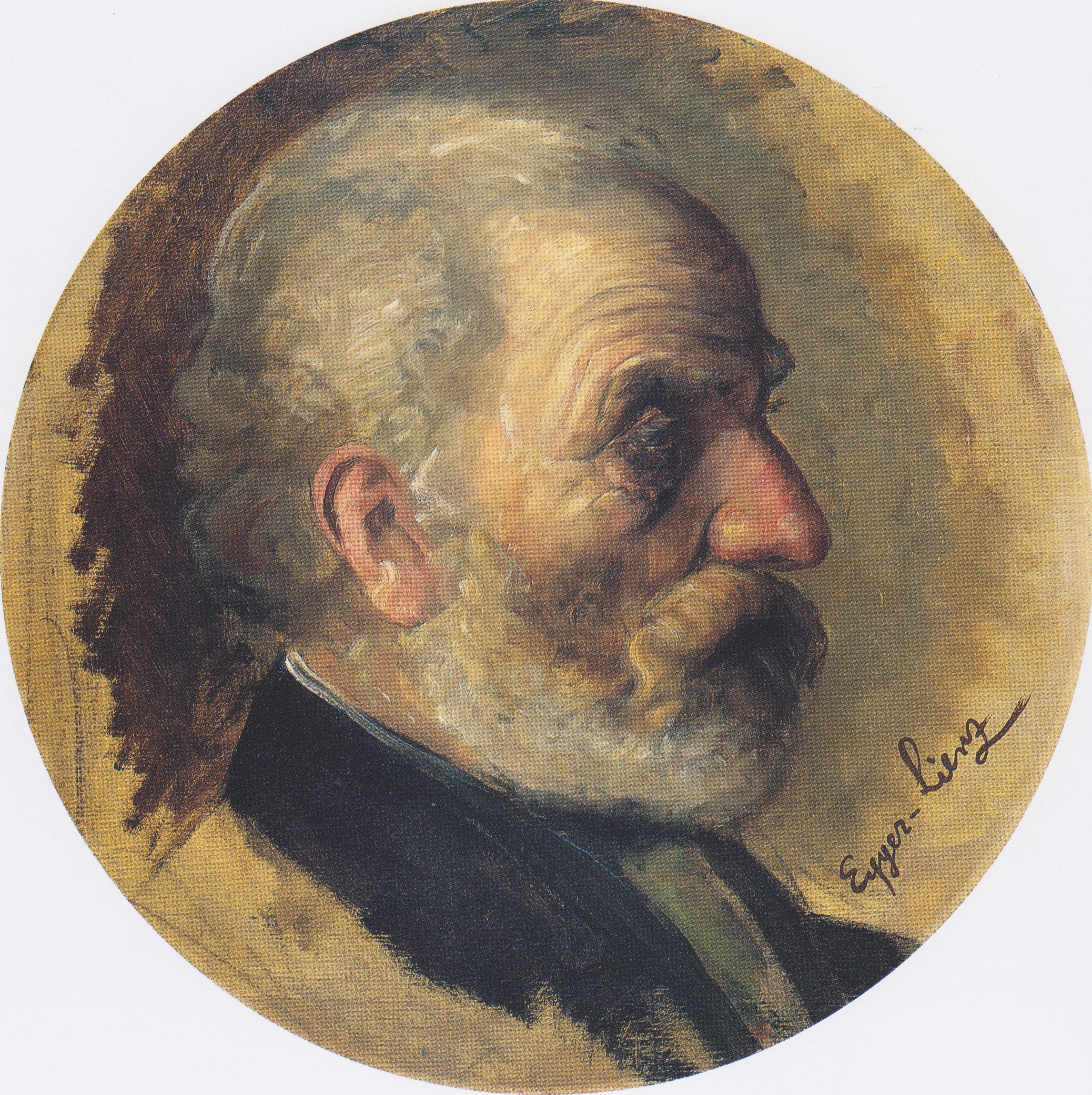
plate no. 1795
Männerkopf
Albin Egger-Lienz, 1899
study guide
est. 8 hrsapproach — 8 steps
- step 01
Sketch the basic oval shape and the placement of the head and shoulders.
- step 02
Lightly sketch the main features of the face (nose, eyes, mouth, ear) and the outline of the beard.
- step 03
Apply a thin wash of burnt umber and yellow ochre to establish the background tone.
- step 04
Block in the darkest areas of the painting, such as the coat and shadows on the face, using a mix of burnt umber and black.
- step 05
Begin layering lighter tones on the face, mixing white with yellow ochre and a touch of red for the skin tones.
- step 06
Pay attention to the subtle variations in color and value to create the form of the face.
- step 07
Add details to the beard and hair, using a dry brush technique to create texture.
- step 08
Refine the details and add highlights to complete the painting.
color palette
primary · burnt umber · yellow ochre · titanium white
secondary · ivory black · cadmium red light
Mix burnt umber and black for dark shadows. Use white, yellow ochre, and a touch of red for skin tones. Vary the proportions to create subtle tonal changes.
techniques
- ·dry brush texture
- ·blending
- ·layering
- ·scumbling
- ·limited palette
common pitfalls
- →Overworking the details too early in the process.
- →Failing to establish a strong value structure.
- →Using too much paint and losing the subtle tonal variations.
- →Not paying close enough attention to the proportions of the face.
materials
surface · stretched canvas
required
- ·stretched canvas (oval shape preferred)
- ·burnt umber oil paint
- ·yellow ochre oil paint
- ·titanium white oil paint
- ·ivory black oil paint
- ·cadmium red light oil paint
- ·round brushes (various sizes)
- ·linseed oil
optional
- ·palette knife
- ·medium gloss
- ·easel
Use a canvas with a smooth surface for easier blending. Consider using a pre-primed canvas to save time.
tips & new artworks in your inbox
no spam — unsubscribe anytime.
or to save artworks, chat, and track progress
in this vein
related artworks

Portrait of James Wright
Thomas Eakins

Portrait of a lady
Karl Gussow

Sisters
Émile Auguste Hublin

Catching Up on the News
Eastman Johnson

At the porter's room
Vladimir Makovsky

The portrait painter in the country
Albin Egger-Lienz

Flowers and Fruit
Henri Fantin-Latour

Valle de México desde el Molino del Rey
Jose Maria Velasco