plate no. 0382
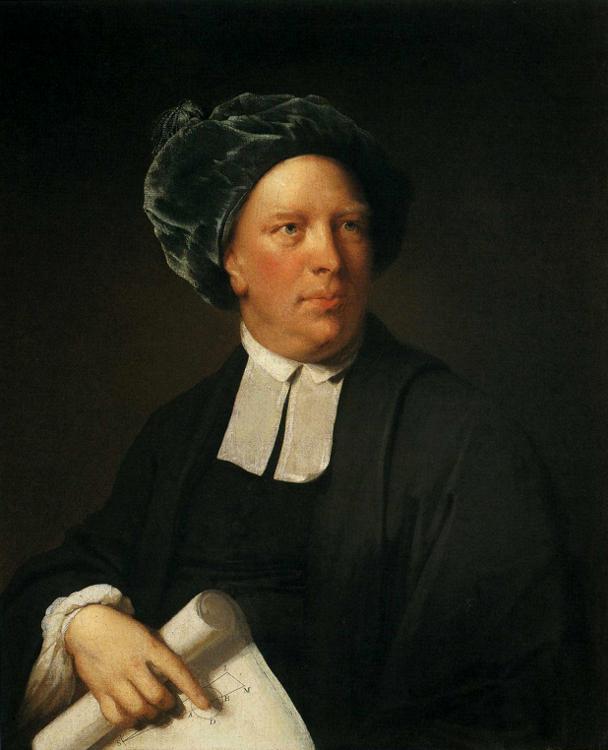
John Pickering
Joseph Wright, 1780
recreation guide
This recreation guide addresses Joseph Wright of Derby’s portrait of John Pickering (1780). Wright is historically significant as an English painter who specialized in portraiture and landscapes, notably acclaimed for expressing the spirit of the Industrial Revolution and the Age of Enlightenment (Source 7). His style is defined by the use of tenebrism, an exaggerated form of chiaroscuro that emphasizes stark contrasts between light and dark, often featuring candle-lit subjects (Source 1, Source 7). While the specific visual details of the John Pickering portrait are not described in the provided sources, Wright’s general practice involves dramatic lighting effects where light illuminates specific areas against a dusky or dark background, creating a sense of depth and drama similar to his works like 'A Philosopher Lecturing on the Orrery' or 'Dovedale by Moonlight' (Source 2).
estimated time
20-30 hours over 5-7 sessions
materials
4 items
steps
6 in sequence
materials
| item | purpose | modern equivalent |
|---|---|---|
| Oil paints (Ultramarine, White, Black, Red, Yellow) | Primary pigments for underpainting and glazing | Modern tube oils; Ultramarine blue, Titanium white, Ivory black, Cadmium red/yellow |
| Oil of Copavia (or modern linseed/walnut oil) | Medium for the first and second paintings, as noted by Reynolds in the context of old master techniques | Stand oil or refined linseed oil |
| Varnish | Mixed with oil for later glazing stages to achieve transparency | Dammar varnish or synthetic resin varnish |
| Canvas | Support for the oil painting | Linen or cotton canvas, primed |
preparation
surface prep
The canvas should be prepared with a ground suitable for oil painting. While specific ground recipes for Wright are not detailed in the sources, the practice of the period involved preparing a sound surface for the 'alphabet of our art' (Source 1). A neutral or slightly toned ground is likely, allowing for the subsequent grisaille underpainting.
underdrawing
Sources do not specify Wright’s exact underdrawing method for this portrait. However, general portrait practice of the era involved sketching the general form and rough likeness in pencil, charcoal, or thin oil before completing the face (Source 8). Wright’s dramatic lighting suggests a careful initial layout of light and shadow masses.
underpainting
Wright likely employed a monochrome underpainting (grisaille) to establish values before applying color. This is supported by the description of old master techniques where a preparation is made by 'mentally extracting the red and yellow colours' to create a base, which is then glazed (Source 5). This method allows for the control of chiaroscuro essential to Wright’s tenebrist style.
color palette
Ultramarine
Ultramarine blue
Used in the initial underpainting stages along with black and white, as per Reynolds’ method cited in the sources
White
Lead white or modern Titanium white
Highlights and mixing for flesh tones and light effects
Black
Ivory black or lamp black
Deep shadows and defining the tenebrist contrast
Red and Yellow
Vermilion/Cadmium Red, Yellow Ochre/Cadmium Yellow
Applied as transparent glazes over the dry grisaille to create flesh tones and warm light effects
composition
Specific compositional elements of the John Pickering portrait are not described in the sources. However, Wright’s work is characterized by dramatic chiaroscuro and tenebrism, where light sources (often candles or moonlight) illuminate key subjects against dark backgrounds (Source 2, Source 7). The composition likely utilizes strong value contrasts to emphasize the sitter’s form and expression, consistent with his candle-lit subjects.
step by step
underdrawing→underpainting→first pass→refining→finishing→varnishing
underdrawing
step 01
Sketch the general form and likeness of the sitter on the canvas using pencil, charcoal, or thin oil. Focus on the placement of the head and hands, as these are often completed first in portrait studios (Source 8).
Tip — Ensure the proportions are correct before proceeding, as Wright’s dramatic lighting relies on accurate form.
Initial sketching
underpainting
step 02
Create a grisaille (monochrome) underpainting using black, ultramarine, and white. This establishes the values and chiaroscuro effects without color distraction (Source 5).
Tip — Mentally extract red and yellow colors to focus on light and shadow structure (Source 5).
Grisaille
first pass
step 03
Allow the grisaille to dry completely. Then, begin glazing with oil and color. Apply transparent coats of red and yellow tones to build up flesh colors and warm highlights (Source 5).
Tip — Use oil of copavia or a similar medium for the first painting stage (Source 5).
Glazing
refining
step 04
Continue to build color intensity by glazing and scumbling. Scumbling involves semi-opaque painting over darker grounds to create coldness or grey blooms, useful for shadows and atmospheric effects (Source 5).
Tip — Watch for the underlying painting showing through the semi-opaque layers to maintain depth.
Scumbling
finishing
step 05
Enhance the brilliance of colors by utilizing complementary contrasts. For example, if flesh tones appear too red, surrounding them with green tones can soften the effect, or using blue tones to make orange hues appear more vibrant (Source 4).
Tip — Adjust the background colors to influence the perception of the sitter’s skin tones without altering the paint itself.
Simultaneous Contrast
varnishing
step 06
Apply a final varnish to protect the painting and unify the glazes. This step was part of the old master process, often using varnish mixed with oil in later stages (Source 5).
Tip — Ensure the painting is completely dry before varnishing to prevent cracking.
Varnishing
critical techniques
Tenebrism/Chiaroscuro
Wright is noted for his use of tenebrism, an exaggerated chiaroscuro effect that emphasizes contrast between light and dark, often in candle-lit scenes (Source 7). This technique creates dramatic illumination and deep shadows.
Glazing and Scumbling
Old masters, including those of Wright’s era, used glazing (transparent coats) and scumbling (semi-opaque layers) to achieve rich color and depth. This method allows for the modification of color appearance without changing the underlying pigment (Source 5).
Simultaneous Contrast
Using complementary colors to enhance the brilliance or soften the intensity of adjacent colors. For instance, surrounding a red area with green tones to make it appear less pronounced (Source 4).
common pitfalls
- →Over-modeling or being too tied down to outlines, which can result in a 'smallness' that detracts from the broad masses of light and shadow (Source 1).
- →Failing to allow the grisaille underpainting to dry completely before glazing, which can lead to muddiness and cracking (Source 5).
- →Ignoring the effects of simultaneous contrast, resulting in flat or unnatural color interactions between the sitter and the background (Source 4).
what the sources don't tell us
Where the corpus is silent, we say so rather than guess. These are the gaps a complete recreation guide would normally cover that our source passages don't.
- ·Specific visual details of the John Pickering portrait (clothing, pose, background objects) are not described in the sources.
- ·Wright’s exact pigment palette for this specific painting is not documented in the provided texts.
- ·The specific lighting setup (candle vs. window light) for this portrait is not specified, though Wright is known for candle-lit subjects.
grounded in
The technical procedure in this guide traces to the following classical art-instruction texts.
The Practice of Oil Painting↗
- ON COPYING — applied to Warning against over-modeling and smallness in technique
- COLOURING A MONOCHROME — applied to Glazing and scumbling techniques
Laws of Contrast of Colour↗
- 6. Put beside each other two flat tints — applied to Principles of chiaroscuro and color contrast
The Science of Painting↗
- 4. When two colours separated by more than two others — applied to Use of complementary colors to modify appearance
cross-referenced from
Named facts about this artwork and artist were checked against these reference pages.
Wikipedia bio — Joseph Wright↗
- part 3 — applied to Description of Wright’s chiaroscuro and candle-lit subjects
- part 1 — applied to Wright’s specialization in tenebrism and portraiture
Wikipedia: Portrait painting↗
- part 5 — applied to General portrait process and underdrawing
Read more about the corpus on the sources page and how the guides are built on the methods page.
tips & new artworks in your inbox
no spam — unsubscribe anytime.
or to save artworks, chat, and track progress
in this vein
related artworks

Girl with a Straw Hat
Judith Leyster

Gezicht Op De Laurenskerk Gezien Vanuit Noordoosten
Abraham Storck

Bathsheba Bathing
Francesco Solimena

Repentant Peter
Guido Reni

Itinerant Musicians
Jacob Ochtervelt

Marie Christine
Marcello Bacciarelli

Santa Cecilia E Due Angeli
Giulio Cesare Procaccini

Scene from the Life of Saint Benedict
Philippe de Champaigne