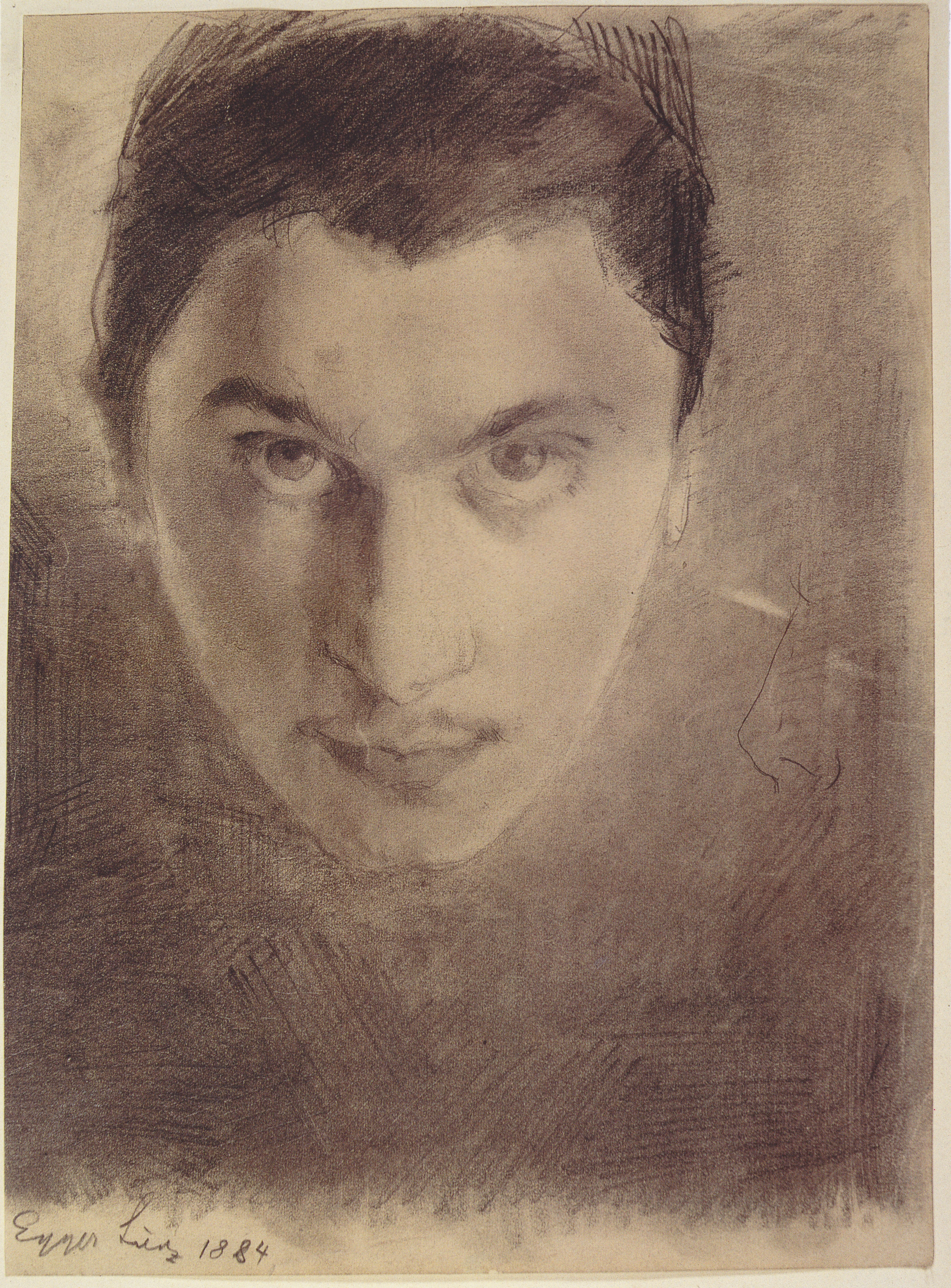
plate no. 3255
Frühes Selbstbildnis
Albin Egger-Lienz, 1884
study guide
est. 8 hrsapproach — 8 steps
- step 01
Lightly sketch the basic shapes of the head and facial features, paying attention to proportions.
- step 02
Establish the darkest areas of the hair and background with broad strokes.
- step 03
Begin layering in mid-tones on the face, focusing on the areas in shadow.
- step 04
Use a blending stump or soft cloth to smooth out the tones and create subtle gradations.
- step 05
Define the features with sharper lines and darker values, especially around the eyes and mouth.
- step 06
Add highlights to the forehead, nose, and cheeks to create a sense of volume.
- step 07
Refine the background by adding more layers of tone and texture.
- step 08
Make final adjustments to the values and details to achieve a cohesive and realistic portrait.
color palette
primary · sepia · white
secondary · none
Varying the pressure and layering of sepia creates the different values. White is used sparingly for highlights.
techniques
- ·hatching
- ·cross-hatching
- ·blending
- ·value shading
- ·contour drawing
common pitfalls
- →Overworking the drawing and losing the freshness of the initial sketch.
- →Creating harsh lines and transitions instead of smooth gradations.
- →Failing to accurately capture the proportions of the face.
- →Not paying attention to the direction of light and shadow.
materials
surface · toned paper
required
- ·toned paper
- ·sepia pencil
- ·white chalk or pencil
- ·kneaded eraser
- ·blending stump
- ·fixative spray
optional
- ·ruler
- ·grid for proportions
Choose a toned paper that is slightly darker than the lightest areas of the drawing. A smooth paper will be easier to blend on.
tips & new artworks in your inbox
no spam — unsubscribe anytime.
or to save artworks, chat, and track progress
in this vein
related artworks

Portrait of James Wright
Thomas Eakins

Portrait of a lady
Karl Gussow

Sisters
Émile Auguste Hublin

Catching Up on the News
Eastman Johnson

At the porter's room
Vladimir Makovsky

The portrait painter in the country
Albin Egger-Lienz

Flowers and Fruit
Henri Fantin-Latour

Valle de México desde el Molino del Rey
Jose Maria Velasco