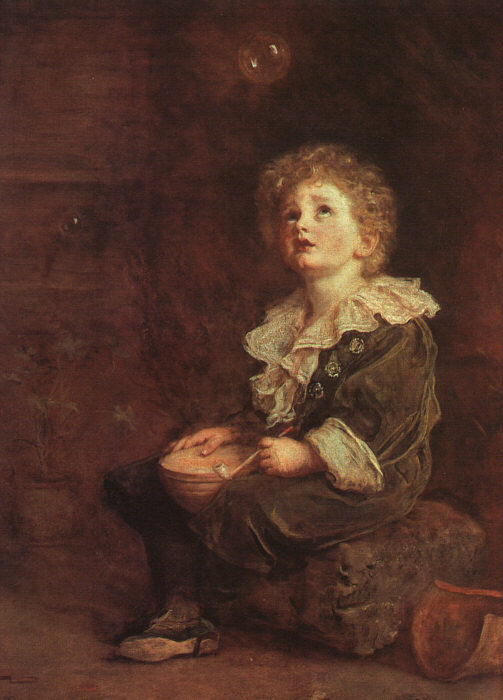
plate no. 1903
Bubbles
John Everett Millais, 1886
study guide
est. 20 hrsapproach — 8 steps
- step 01
Sketch the basic composition, focusing on the placement of the figure and the bubble.
- step 02
Establish the background with broad, blended strokes of dark browns and reds.
- step 03
Block in the main shapes of the figure, paying attention to proportions and pose.
- step 04
Begin layering skin tones, starting with mid-tones and gradually adding highlights and shadows.
- step 05
Define the details of the clothing, including the ruffles and buttons, using subtle variations in color and value.
- step 06
Paint the bowl and pipe, focusing on their texture and form.
- step 07
Add the bubble, using thin layers of iridescent colors to create its translucent effect.
- step 08
Refine the details and adjust the overall values to create a sense of depth and atmosphere.
color palette
primary · burnt umber · raw sienna · titanium white · ivory black
secondary · cadmium yellow · alizarin crimson · ultramarine blue
Achieve skin tones by mixing white, sienna, and a touch of crimson or yellow. Darken colors with umber or black, and create subtle variations by adding small amounts of blue or green.
techniques
- ·glazing
- ·scumbling
- ·blending
- ·chiaroscuro
- ·portraiture
common pitfalls
- →Overworking the details too early in the process.
- →Failing to establish a strong value structure.
- →Using colors that are too saturated or bright.
- →Ignoring the subtle shifts in color temperature.
materials
surface · stretched canvas
required
- ·stretched canvas 18x24
- ·oil paints (burnt umber, raw sienna, titanium white, ivory black, cadmium yellow, alizarin crimson, ultramarine blue)
- ·linseed oil
- ·turpentine or odorless mineral spirits
- ·assorted brushes (round and flat)
- ·palette
- ·palette knife
- ·rags
optional
- ·retouch varnish
- ·medium (e.g., Liquin)
Use high-quality oil paints for best results. Allow each layer to dry before applying the next.
tips & new artworks in your inbox
no spam — unsubscribe anytime.
or to save artworks, chat, and track progress
in this vein


