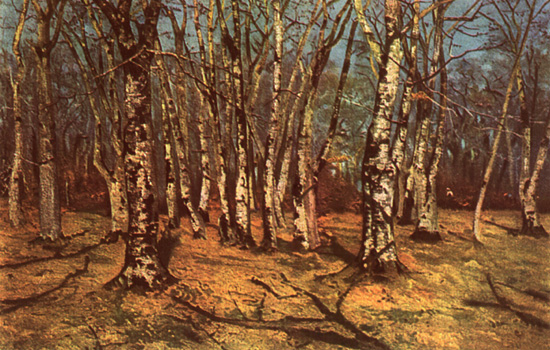
plate no. 9741
Beech Forest
study guide
est. 12 hrsapproach — 8 steps
- step 01
Sketch the basic composition, focusing on the placement of the trees and the horizon line.
- step 02
Establish the background colors, using lighter and cooler tones to create depth.
- step 03
Block in the main tree trunks with basic shapes and values.
- step 04
Add details to the tree bark, using a variety of brushstrokes and colors.
- step 05
Paint the ground plane, paying attention to the light and shadow patterns.
- step 06
Refine the details of the branches and foliage.
- step 07
Add cast shadows from the trees, using a dark, cool color.
- step 08
Make final adjustments to the colors and values to create a cohesive and atmospheric painting.
color palette
primary · raw umber · titanium white · ultramarine blue
secondary · yellow ochre · burnt sienna · sap green
Mix various shades of brown and gray by combining raw umber, ultramarine blue, and titanium white. Use yellow ochre and burnt sienna to create warm highlights on the ground and trees. Add small amounts of sap green to create a natural, earthy tone.
techniques
- ·dry brush texture
- ·scumbling
- ·atmospheric perspective
- ·broken color
common pitfalls
- →Overworking the details and losing the overall atmospheric effect.
- →Using too much pure color without mixing it with other colors to create subtle variations.
- →Not paying attention to the light and shadow patterns.
- →Making the tree trunks too uniform in color and texture.
materials
surface · stretched canvas
required
- ·stretched canvas
- ·raw umber oil paint
- ·titanium white oil paint
- ·ultramarine blue oil paint
- ·yellow ochre oil paint
- ·burnt sienna oil paint
- ·round brushes (various sizes)
- ·linseed oil
optional
- ·palette knife
- ·medium gloss
- ·easel
Use a medium-grit canvas to allow for texture. Consider using a limited palette to simplify color mixing.
tips & new artworks in your inbox
no spam — unsubscribe anytime.
or to save artworks, chat, and track progress
in this vein


