plate no. 8992
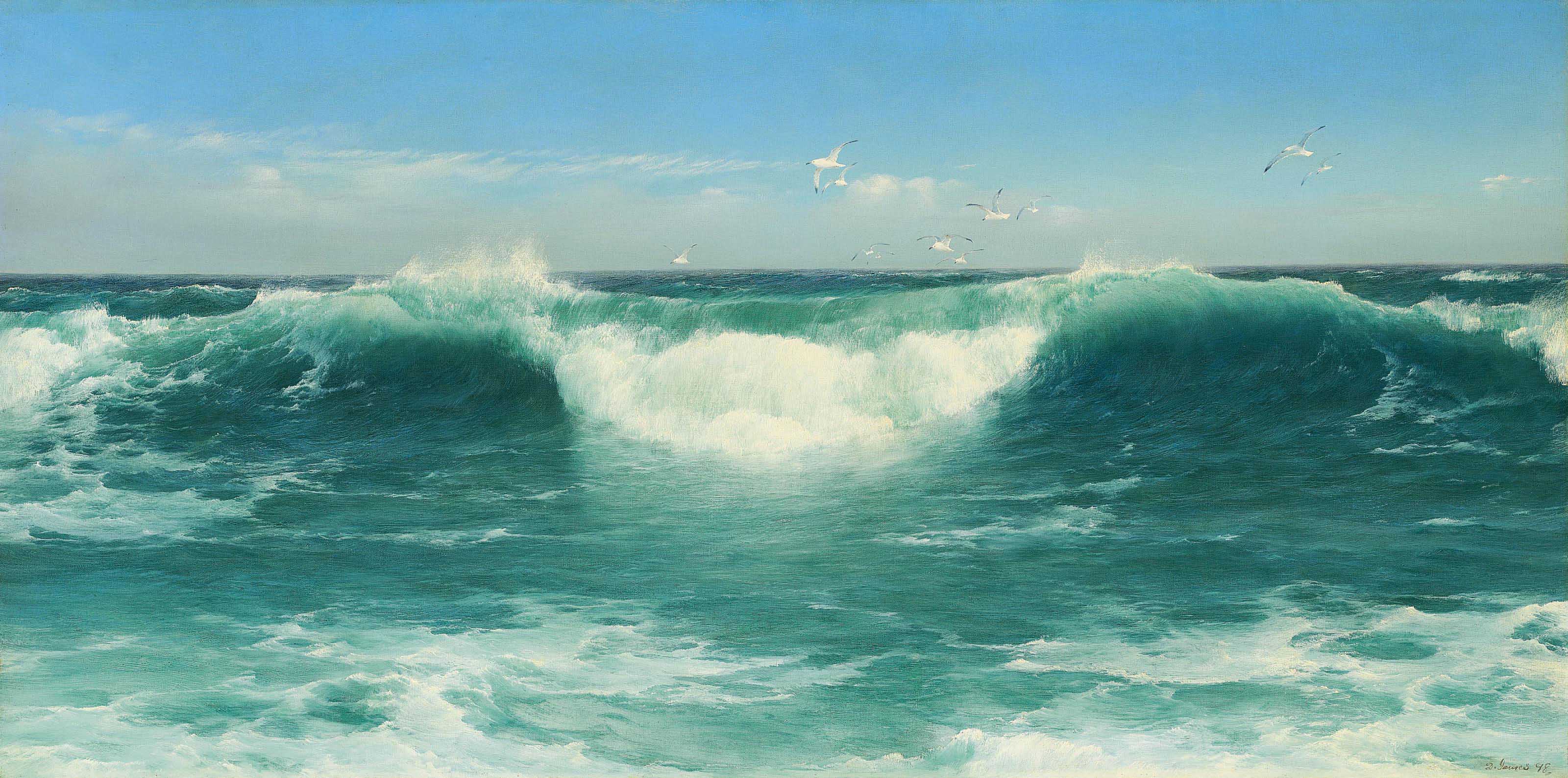
A Cornish Roller
study guide
est. 12 hrsapproach — 8 steps
- step 01
Sketch the basic composition, focusing on the horizon line and the placement of the main wave.
- step 02
Establish the sky with a light blue base, adding subtle variations in tone and soft clouds.
- step 03
Block in the overall shapes of the waves using darker blues and greens for the deeper areas and lighter shades for the crests.
- step 04
Begin layering the water, adding highlights and shadows to define the form and movement of the waves.
- step 05
Mix and apply the white foam and spray, paying attention to the direction and texture of the water.
- step 06
Refine the details of the waves, adding smaller ripples and splashes to create a sense of realism.
- step 07
Paint the distant ocean and horizon line, using lighter and cooler colors to create atmospheric perspective.
- step 08
Add the birds in the sky as a final touch, paying attention to their size and placement.
color palette
primary · cerulean blue · viridian green · titanium white
secondary · ultramarine blue · yellow ochre
Mix various shades of blue and green with white to achieve the different tones of the water. Use yellow ochre to warm up the greens and create subtle variations in color.
techniques
- ·layering
- ·blending
- ·dry brushing
- ·atmospheric perspective
- ·scumbling
common pitfalls
- →Overmixing colors, resulting in muddy tones.
- →Failing to establish a clear value structure, leading to a flat and unrealistic depiction of the water.
- →Overworking the details, resulting in a stiff and unnatural appearance.
- →Ignoring atmospheric perspective, making the distant ocean appear too sharp and defined.
materials
surface · stretched canvas
required
- ·stretched canvas
- ·oil paints
- ·round brushes
- ·flat brushes
- ·palette knife
- ·linseed oil
- ·palette
- ·mineral spirits
optional
- ·painting medium
- ·varnish
- ·easel
Use high-quality oil paints for best results. Consider using a medium to improve the flow and blending of the paints.
tips & new artworks in your inbox
no spam — unsubscribe anytime.
or to save artworks, chat, and track progress
in this vein


