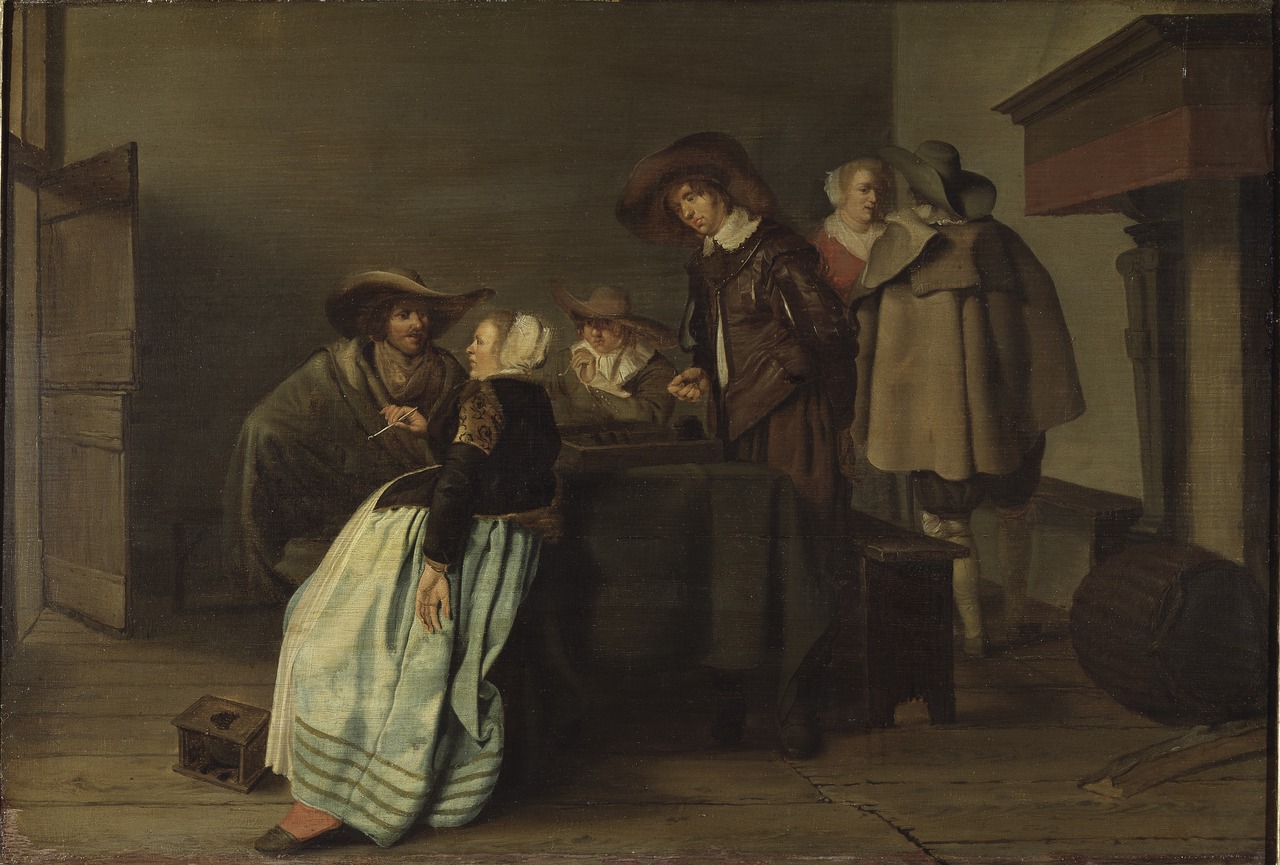
plate no. 3622
A Conversation
Pieter Codde, 1628
study guide
est. 15 hrsapproach — 8 steps
- step 01
Begin with a light sketch outlining the main figures and objects, paying attention to proportions and placement.
- step 02
Establish the overall tonal values of the scene with a thin wash of burnt umber or similar earth tone.
- step 03
Block in the main colors of the figures' clothing and the background, focusing on capturing the subtle variations in light and shadow.
- step 04
Refine the details of the faces, hands, and clothing, adding highlights and shadows to create depth and dimension.
- step 05
Work on the textures of the wooden floor, table, and other objects, using dry brush techniques to create a sense of realism.
- step 06
Pay attention to the subtle color shifts in the background to create atmospheric perspective.
- step 07
Add final details such as the small box on the floor and the patterns on the woman's clothing.
- step 08
Glaze with thin layers of color to unify the painting and enhance the overall mood.
color palette
primary · burnt umber · raw sienna · ivory black · titanium white
secondary · Prussian blue · yellow ochre · Venetian red
Achieve the muted tones by mixing earth tones with black and white. Use small amounts of blue or red to adjust the temperature of the grays and browns.
techniques
- ·grisaille underpainting
- ·glazing
- ·dry brushing
- ·chiaroscuro
- ·scumbling
common pitfalls
- →Overworking the details too early in the process.
- →Failing to establish a strong tonal foundation.
- →Using colors that are too bright or saturated.
- →Ignoring the subtle variations in light and shadow.
materials
surface · stretched canvas
required
- ·stretched canvas (16x20 inches)
- ·oil paints (burnt umber, raw sienna, ivory black, titanium white, yellow ochre, Prussian blue, Venetian red)
- ·linseed oil
- ·turpentine or odorless mineral spirits
- ·assorted brushes (round and flat)
- ·palette
- ·palette knife
- ·rags
optional
- ·medium gloss
- ·retouch varnish
- ·easel
Use high-quality oil paints for best results. Allow each layer to dry before applying the next.
tips & new artworks in your inbox
no spam — unsubscribe anytime.
or to save artworks, chat, and track progress
in this vein
related artworks

Girl with a Straw Hat
Judith Leyster

Gezicht Op De Laurenskerk Gezien Vanuit Noordoosten
Abraham Storck

Bathsheba Bathing
Francesco Solimena

Repentant Peter
Guido Reni

Itinerant Musicians
Jacob Ochtervelt

Marie Christine
Marcello Bacciarelli

Santa Cecilia E Due Angeli
Giulio Cesare Procaccini

Scene from the Life of Saint Benedict
Philippe de Champaigne