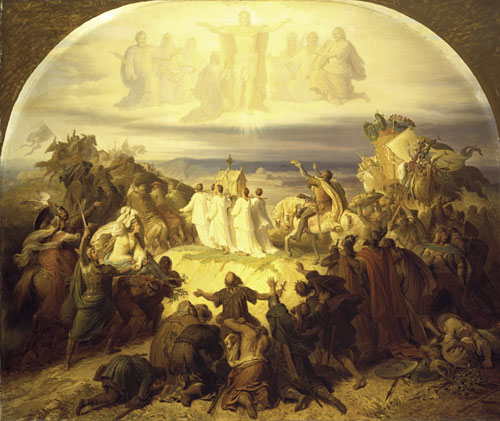
Wilhelm von Kaulbach
1805–1874 · German · 30 artworks
Romanticismhistorical paintingallegorical representationdetailed compositionnarrative artmural painting
artist bio
Wilhelm von Kaulbach was a German painter known for his grand historical and allegorical murals. As director of the Munich Academy, he significantly influenced 19th-century German art, emphasizing narrative and detailed compositions.
related: Eugene Delacroix, Caspar David Friedrich, Paul Delaroche
30 artworks

Die Kreuzfahrer Vor Jerusalem
difficulty

Hans Sachs in Der Werkstatt
1876
difficulty

the Arts Flourishing in Munich
1861
difficulty

A Huge Angel Stands Atop Noah's Ark, Its Back Turned Towards
difficulty

German Artists Make Their Sketches in Rome
1848
difficulty

Porträt Des Malers Heinlein Als Ritter Schellenberg
difficulty

Marie of Hanover and Her Daughter Mary in Marienburg Castle
1866
difficulty

Reineke Fuchs1
1857
difficulty

Portrait of Swiss Engraver Samuel Amsler
1850
difficulty

Maximilian Ii of Bavaria
difficulty

Performance of Iphigenia in Tauris
difficulty

The Destruction of Jerusalem by Titus
1846
difficulty

Marie Zu Hohenlohe
1864
difficulty

Hansel
difficulty

Kaulbach’s Grab am Frühmorgen des 11. April
1874
difficulty

Prinzessin Marie Gabrielle Von Bayern
1890
difficulty

Schiller at Weimar by Wilhelm Von Kaulbach
1913
difficulty

Mentally Ill Patients in the Garden of An Asylum
difficulty

Der Kaiser und der Schnitter
1867
difficulty

in König Nobels Schlafgemach
1846
difficulty

Gretel
difficulty

Kampf Gegen Die Chimäre Der Perückenzeit
1850
difficulty

Portrait of Ferenc Liszt
1856
difficulty

Reineke Fuchs
1857
difficulty

Battle of Salamis
1868
difficulty

She Sank down Upon Her Knees
1900
difficulty

Bildnis Ludwig Michael Schwanthaler
1886
difficulty

Peter Arbues verurtheilt eine Ketzerfamilie zum Feuertode
1872
difficulty

Gretchen in Front of the Mater Dolorosa
1859
difficulty

Prachtvolle Huldigungsszene
1840
difficulty