Hieronymus Bosch
1450–1516 · Dutch · 30 artworks
Northern Renaissancesymbolismallegorydetailed imagerymoralizing narrativesfantastic creatures
artist bio
Hieronymus Bosch was a Dutch painter whose vividly imaginative and often nightmarish depictions of religious concepts and narratives set him apart. His works, filled with symbolism and complex allegories, offer a unique perspective on morality, sin, and the human condition, influencing generations of artists.
related: Pieter Bruegel the Elder, Jan van Eyck, Robert Campin
30 artworks

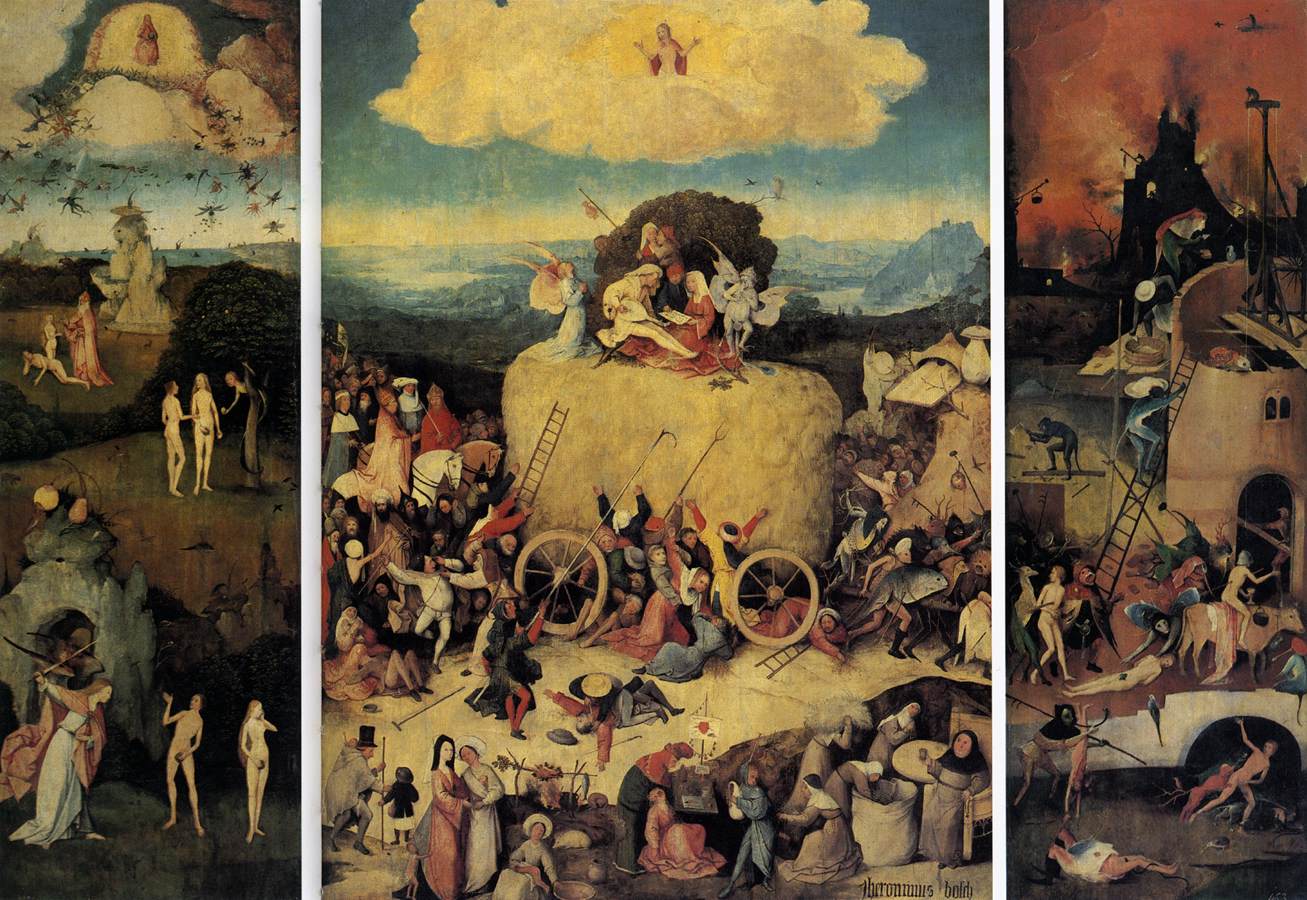
Haywain
1500
difficulty

Here is a Man (Ecce Homo)
1480
difficulty

The Garden of Earthly Delights (detail)
1500
difficulty

The Marriage Feast at Cana
1500
difficulty

Temptation of St. Anthony (detail)
1506
difficulty

The Carrying of the Cross, Christ and St. Veronica
1516
difficulty

Adoration of the Magi
1495
difficulty

Christ Carrying the Cross
1510
difficulty

Last Judgement, left wing of the triptych
1508
difficulty

Adoration of the Magi
1500
difficulty

The House of Ill Fame
1516
difficulty

Christ Crowned with Thorns
1510
difficulty

Ascent of the Blessed
1504
difficulty

The Conjuror
1480
difficulty

The Vagabond (The Prodigal Son)
1516
difficulty

Last Judgement
1486
difficulty

The Concert in the Egg
1480
difficulty

Christ Before Pilate
1516
difficulty

The Seven Deadly Sins and the Four Last Things (detail)
1500
difficulty

Crucifixion with a Donor
1485
difficulty

Saint John the Evangelist on Patmos
1485
difficulty

Death and the Miser
1516
difficulty

The Temptation of St Anthony (detail)
1515
difficulty

Allegory of Gluttony and Lust
1500
difficulty

Head of a Halberdier
1490
difficulty

The Garden of Earthly Delights (detail)
1500
difficulty

Haywain (detail)
1502
difficulty

Adoration of the Child
1568
difficulty

The Seven Deadly Sins and the Four Last Things (tabletop)
1485
difficulty

St. John the Baptist in Meditation
1499
difficulty