Gustav Klimt
1862–1918 · Austrian · 32 artworks
Art Nouveau (Modern)SymbolismVienna SecessionGold leaf applicationOrnamental patternsSymbolic imageryEmphasis on the female formFlattened perspective
artist bio
Gustav Klimt was an Austrian Symbolist painter and one of the most prominent members of the Vienna Secession movement. His work is characterized by opulent and decorative surfaces with a focus on the female form, often incorporating gold leaf and intricate patterns.
related: Egon Schiele, Odilon Redon
32 artworks

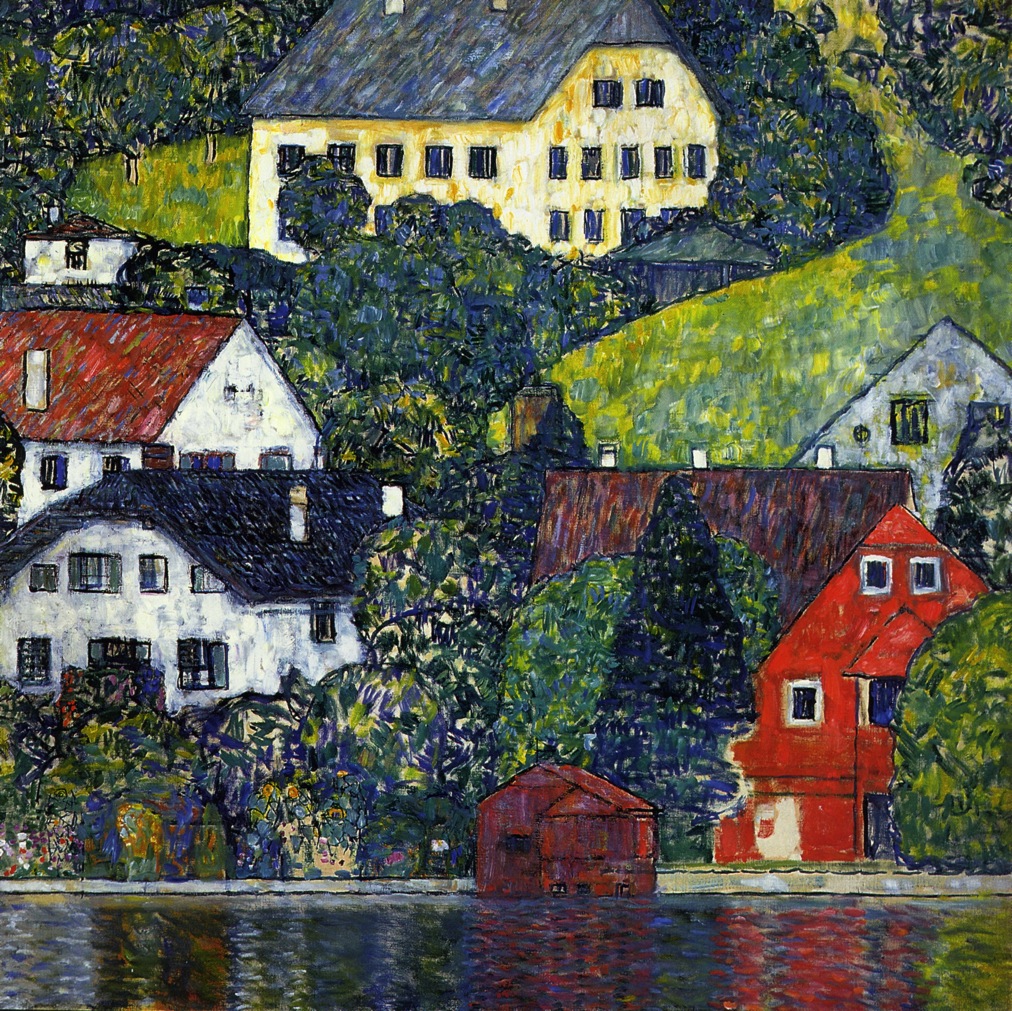
Houses at Unterach on the Attersee
1916
difficulty

Fir Forest I
1901
difficulty

The Old Burgtheater
1889
difficulty

Portrait of a man with beard
1879
difficulty

Birch in a Forest
1903
difficulty

Flower Garden
1907
difficulty

The Schloss Kammer on the Attersee, III
1910
difficulty

Emilie Flöge, Aged 17
1891
difficulty

Schloss Kammer on the Attersee IV
1910
difficulty

Park of Schönbrunn
1916
difficulty

Portrait of Marie Breunig
1894
difficulty

Garden with Roosters
1917
difficulty

Two Girls With An Oleander
1890
difficulty

Country Garden with Sunflowers
1906
difficulty

Lady with Cape and Hat
1898
difficulty

Church in Unterach on the Attersee
1916
difficulty

Church in Cassone
1913
difficulty

The House of Guardaboschi
1912
difficulty

The Kiss
1908
difficulty

Buchenhain
1902
difficulty

Schloss Kammer am Attersee, II
1909
difficulty

Portrait of Adele Bloch-Bauer I
1907
difficulty

Malcesine sur le lac de Garde
1913
difficulty

Study of the Head of a Blind Man
1896
difficulty

Amalie Zuckerkandl
1918
difficulty

Avenue of Schloss Kammer Park
1912
difficulty

Water Castle
1908
difficulty

The Swamp
1900
difficulty

Pear Tree
1903
difficulty

Portrait of Emilie Flöge
1893
difficulty

Litzlberg am Attersee
1915
difficulty

Fruit Trees
1901
difficulty