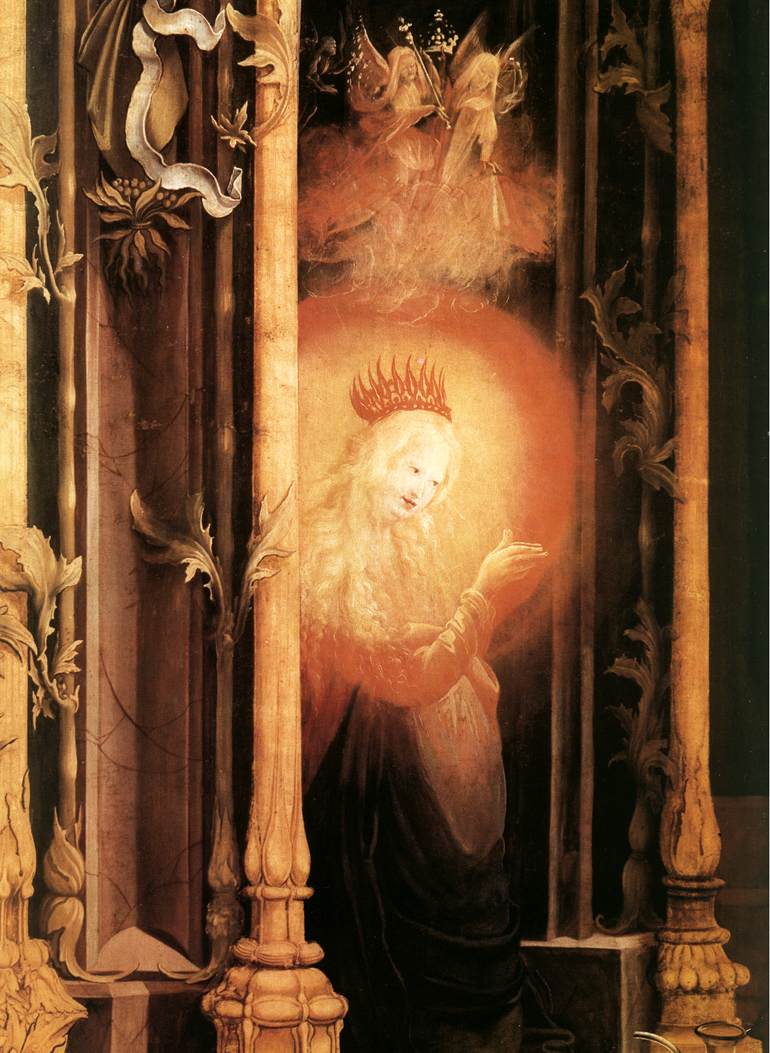
plate no. 4726
The Virgin Illuminated (detail from the Concert of Angels from the Isenheim Altarpiece)
Matthias Grünewald, 1516
study guide
est. 25 hrsapproach — 8 steps
- step 01
Sketch the basic composition, focusing on the placement of the figure, architectural elements, and angels.
- step 02
Establish the underpainting with a monochrome or limited color palette, focusing on values and light sources.
- step 03
Begin layering colors, starting with the darkest areas and gradually building up to the highlights.
- step 04
Glaze thin layers of color to create depth and luminosity, especially in the halo and the figures of the angels.
- step 05
Add details to the architectural elements, such as the columns and carvings.
- step 06
Refine the features of the Virgin Mary, paying attention to the soft light and shadows.
- step 07
Add the final details, such as the crown and the subtle textures in the drapery.
- step 08
Varnish the painting to protect it and enhance the colors.
color palette
primary · raw umber · burnt sienna · ivory black · titanium white
secondary · cadmium yellow light · alizarin crimson
Achieve the warm, glowing tones by layering thin glazes of burnt sienna and cadmium yellow light over a lighter underpainting. Mix ivory black and raw umber for the dark areas, and use titanium white for highlights.
techniques
- ·glazing
- ·scumbling
- ·chiaroscuro
- ·atmospheric perspective
- ·rendering drapery
common pitfalls
- →Overworking the details too early
- →Using colors that are too saturated
- →Failing to establish a strong value structure
- →Not creating enough depth in the background
materials
surface · stretched canvas
required
- ·stretched canvas
- ·raw umber oil paint
- ·burnt sienna oil paint
- ·ivory black oil paint
- ·titanium white oil paint
- ·cadmium yellow light oil paint
- ·alizarin crimson oil paint
- ·assorted round and flat brushes
optional
- ·palette knife
- ·linseed oil
- ·turpentine
- ·medium gloss
Use high-quality oil paints for best results. Allow each layer to dry completely before applying the next glaze.
tips & new artworks in your inbox
no spam — unsubscribe anytime.
or to save artworks, chat, and track progress
in this vein
related artworks

Aristotle
Justus van Gent

The Man of Sorrows with the Virgin Mary and St. John the Evangelist
Martin Schongauer

The pride of the beggar sitting on the train of haughtiness
Albrecht Altdorfer

Adoration of the Magi
Quentin Matsys

Christ on the Cross
Albrecht Altdorfer

Frühling - Das Bereiten Der Blumenbeete
Pieter Brueghel the Younger

Group of Men
Rogier van der Weyden

Madonna and Child Holding a Pear
Bernard Van Orley