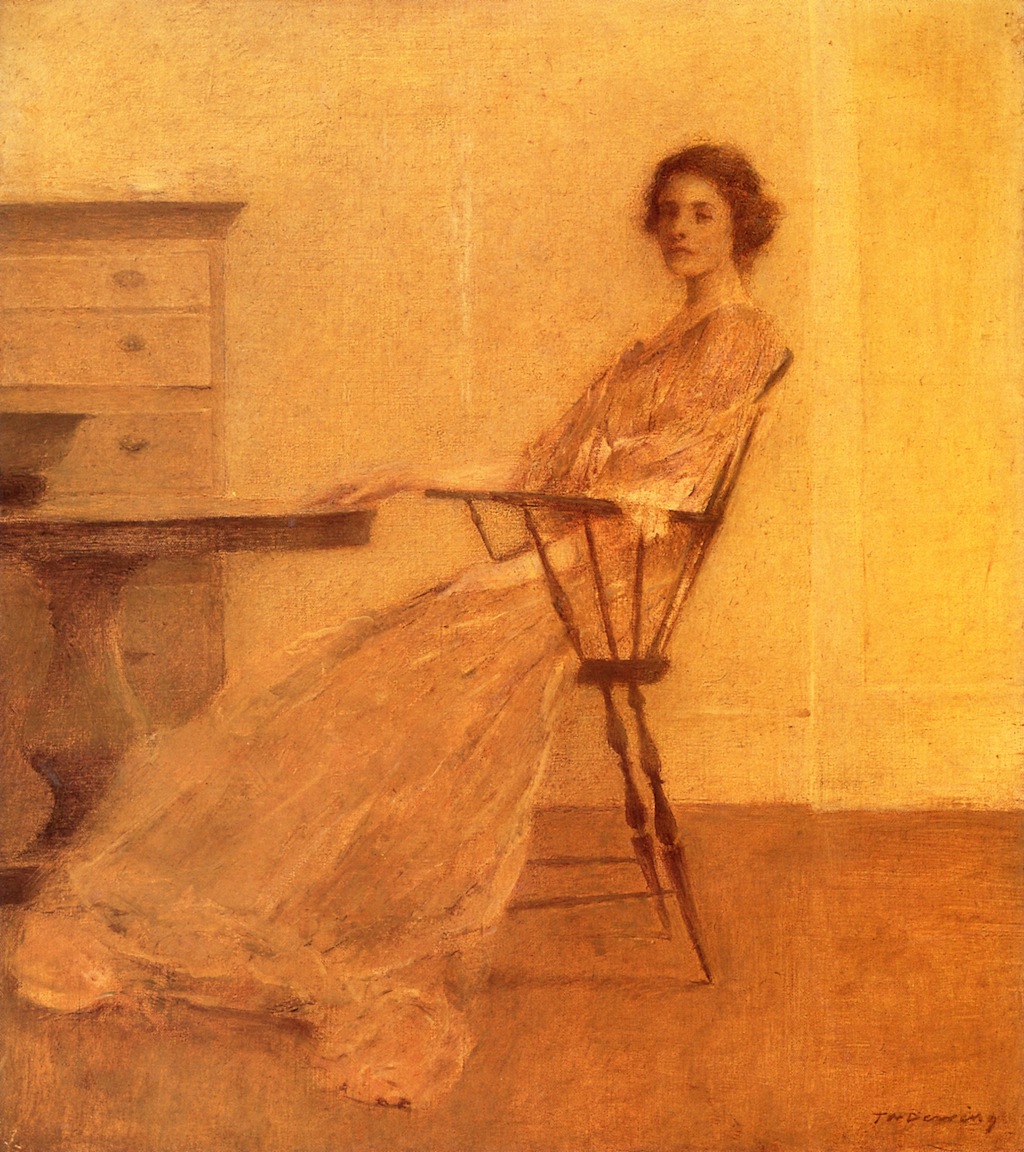
plate no. 8495
Repose
Thomas Dewing, 1921
study guide
est. 12 hrsapproach — 8 steps
- step 01
Lightly sketch the basic composition, focusing on the placement of the figure, chair, and table.
- step 02
Establish the overall warm tone of the painting by applying a thin, diluted wash of yellow ochre or raw sienna.
- step 03
Block in the main shapes of the figure, chair, and table with slightly darker values of the base color.
- step 04
Begin to refine the figure's features and the folds of the dress, using subtle variations in value and color temperature.
- step 05
Add details to the chair and table, paying attention to the way light interacts with the surfaces.
- step 06
Soften edges and blend colors to create a hazy, atmospheric effect.
- step 07
Add final highlights and shadows to enhance the sense of depth and form.
- step 08
Glaze with thin layers of color to unify the painting and adjust the overall tone.
color palette
primary · yellow ochre · raw sienna · burnt umber
secondary · titanium white · ivory black · alizarin crimson
Achieve the subtle variations in tone by mixing the primary colors with white or black. Use small amounts of alizarin crimson to warm up the shadows and add depth.
techniques
- ·glazing
- ·scumbling
- ·soft blending
- ·tonal layering
- ·limited palette
common pitfalls
- →Overworking the details and losing the overall atmospheric effect.
- →Using colors that are too saturated or bright.
- →Creating hard edges that detract from the softness of the painting.
- →Failing to establish a strong tonal foundation before adding details.
materials
surface · stretched canvas
required
- ·stretched canvas
- ·yellow ochre oil paint
- ·raw sienna oil paint
- ·burnt umber oil paint
- ·titanium white oil paint
- ·ivory black oil paint
- ·round brushes (various sizes)
- ·linseed oil
optional
- ·palette knife
- ·medium (e.g., Liquin)
- ·alizarin crimson oil paint
- ·soft cloth
Use a fine-weave canvas to allow for smooth blending and subtle details. Consider toning the canvas with a thin wash of raw sienna before beginning to paint.
tips & new artworks in your inbox
no spam — unsubscribe anytime.
or to save artworks, chat, and track progress
in this vein
related artworks

Spring, Hudson River
Leon Dabo

Oraibi, Hopi village, Arizona
Xavier Martinez

The Farmyard
Albert Pinkham Ryder

Woodland Vista
Ralph Blakelock

Landscape
Leon Dabo

Untitled (Moon Over a Harbor)
Edward Mitchell Bannister

Afternoon in Piedmont (Elsie Whitaker Martinez)
Xavier Martinez

Near Conway, North Wales
Alexander Helwig Wyant