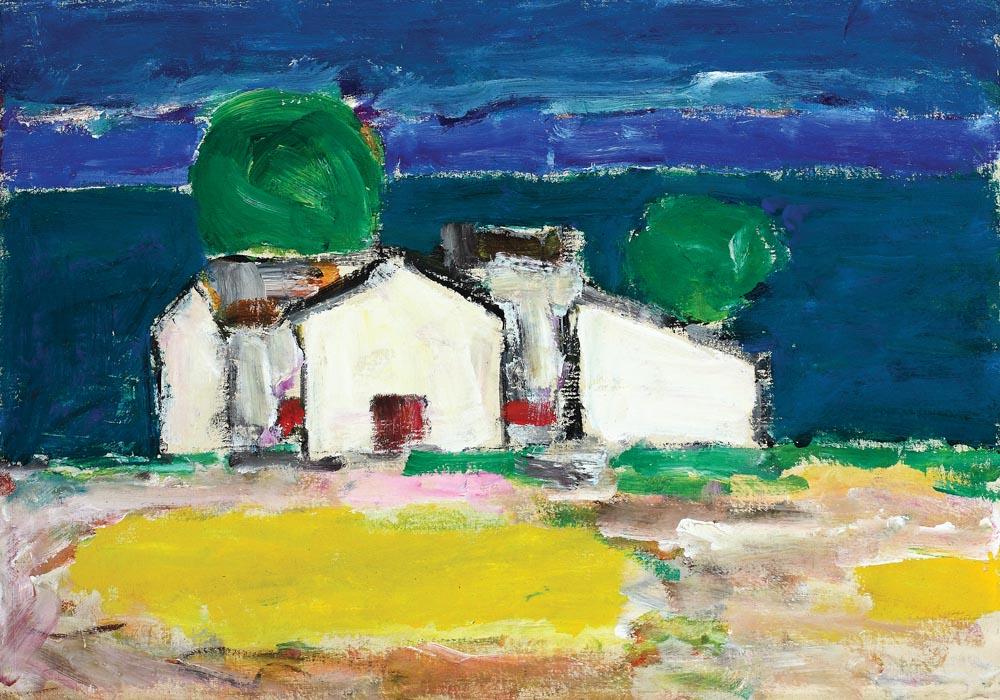
plate no. 3302
Case la mare
study guide
est. 8 hrsapproach — 8 steps
- step 01
Sketch the basic shapes of the buildings, trees, and landscape with light pencil lines.
- step 02
Block in the large areas of color: sky, field, and the general shapes of the buildings and trees.
- step 03
Refine the shapes of the buildings and add details like doors and windows.
- step 04
Add variations in color and value within each area to create depth and interest.
- step 05
Use thicker paint and bolder brushstrokes to create texture and visual interest.
- step 06
Add highlights and shadows to define the forms of the buildings and trees.
- step 07
Adjust the overall composition and color balance as needed.
- step 08
Add final details and refine the edges of shapes.
color palette
primary · ultramarine blue · yellow ochre · titanium white · sap green
secondary · cadmium red · burnt umber · gray
Mix the sky colors by blending ultramarine blue with white, adding a touch of yellow ochre for variation. Create the greens by mixing sap green with yellow ochre and white. Achieve the building color by mixing white with small amounts of gray, yellow ochre, and burnt umber.
techniques
- ·blocking in
- ·expressive brushstrokes
- ·color mixing
- ·scumbling
- ·impasto
common pitfalls
- →Overworking the painting and losing the freshness of the brushstrokes.
- →Making the colors too uniform and lacking variation.
- →Not simplifying the shapes enough and getting bogged down in details.
- →Creating muddy colors by overmixing.
materials
surface · stretched canvas
required
- ·stretched canvas
- ·acrylic or oil paints
- ·round brushes
- ·flat brushes
- ·palette
- ·palette knife
- ·linseed oil (if using oils)
optional
- ·painting medium
- ·easel
- ·rags
- ·odorless mineral spirits (for oil paint cleanup)
Use a medium-textured canvas to enhance the brushstroke visibility. Acrylics will dry faster, while oils allow for more blending time.
tips & new artworks in your inbox
no spam — unsubscribe anytime.
or to save artworks, chat, and track progress
related guides


