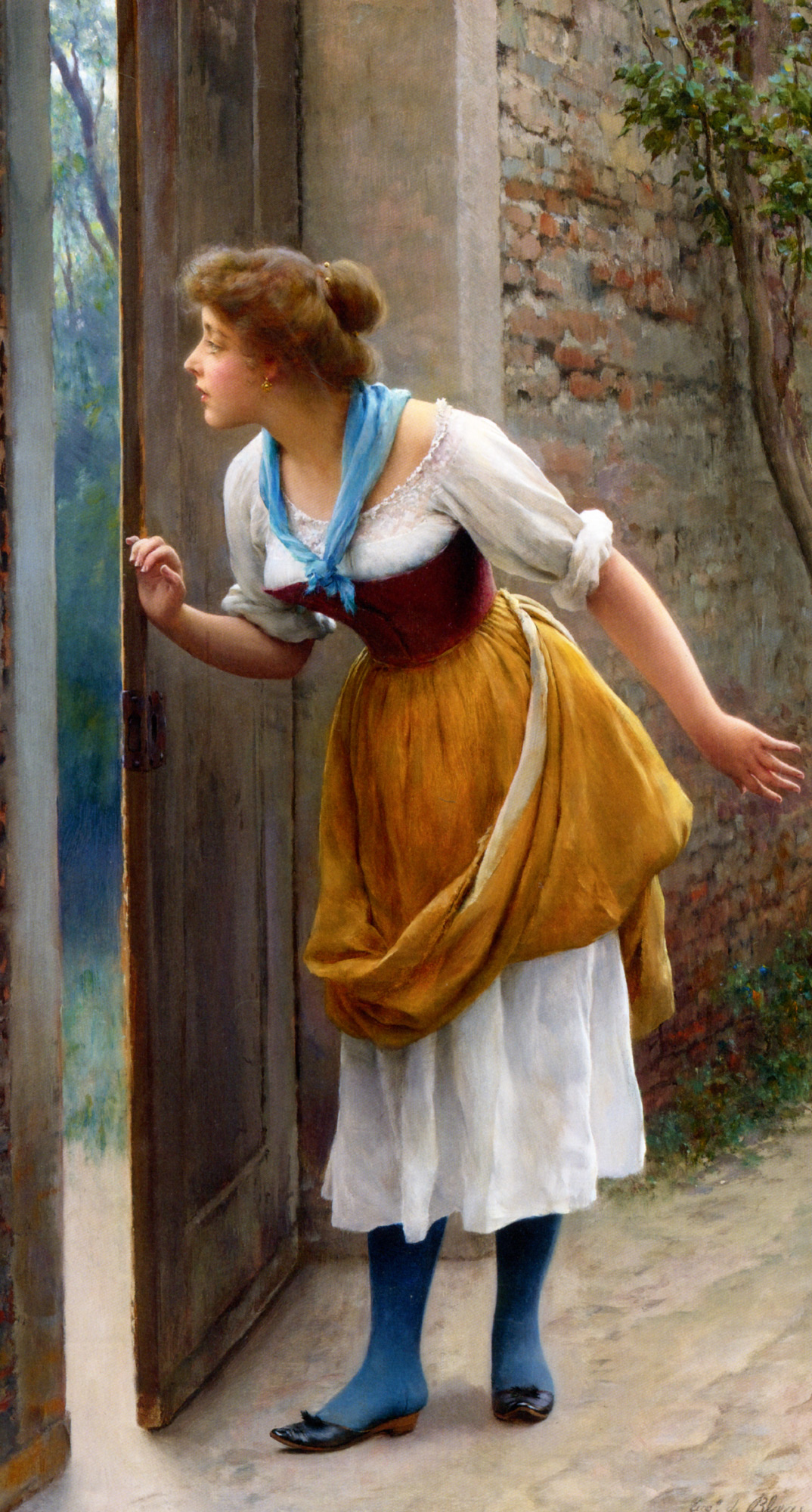
plate no. 9774
The Eavesdropper
Eugene de Blaas, 1906
study guide
est. 20 hrsapproach — 8 steps
- step 01
Sketch the basic composition, focusing on the figure's proportions and placement within the scene.
- step 02
Establish the background elements, including the brick wall, foliage, and the view through the doorway.
- step 03
Block in the main colors of the figure's clothing, paying attention to the folds and shadows in the fabric.
- step 04
Begin refining the figure's features, focusing on accurate proportions and subtle details.
- step 05
Develop the skin tones, using layers of thin paint to create a realistic and luminous effect.
- step 06
Add highlights and shadows to create depth and dimension in the clothing and background.
- step 07
Refine the details of the doorway and the view beyond, paying attention to atmospheric perspective.
- step 08
Add final touches and glazes to unify the painting and enhance the overall effect.
color palette
primary · titanium white · yellow ochre · burnt sienna · ultramarine blue
secondary · alizarin crimson · raw umber · viridian
Achieve the skin tones by mixing white, yellow ochre, and a touch of alizarin crimson. Use ultramarine blue and burnt sienna to create a range of neutral tones for the brick wall and doorway. Mix viridian with yellow ochre for the foliage.
techniques
- ·glazing
- ·scumbling
- ·chiaroscuro
- ·blending
- ·atmospheric perspective
common pitfalls
- →Overworking the details, resulting in a stiff and unnatural appearance.
- →Failing to accurately capture the proportions of the figure.
- →Using colors that are too saturated, resulting in a garish and unrealistic effect.
- →Neglecting the importance of atmospheric perspective in the background.
materials
surface · stretched canvas
required
- ·stretched canvas 18x24
- ·oil paints (titanium white, yellow ochre, burnt sienna, ultramarine blue, alizarin crimson, raw umber, viridian)
- ·linseed oil
- ·turpentine
- ·assorted brushes (round and flat)
- ·palette
- ·palette knife
- ·rags
optional
- ·medium gloss
- ·retouch varnish
- ·easel
Use high-quality oil paints for best results. Consider using a pre-primed canvas to save time.
tips & new artworks in your inbox
no spam — unsubscribe anytime.
or to save artworks, chat, and track progress
in this vein


