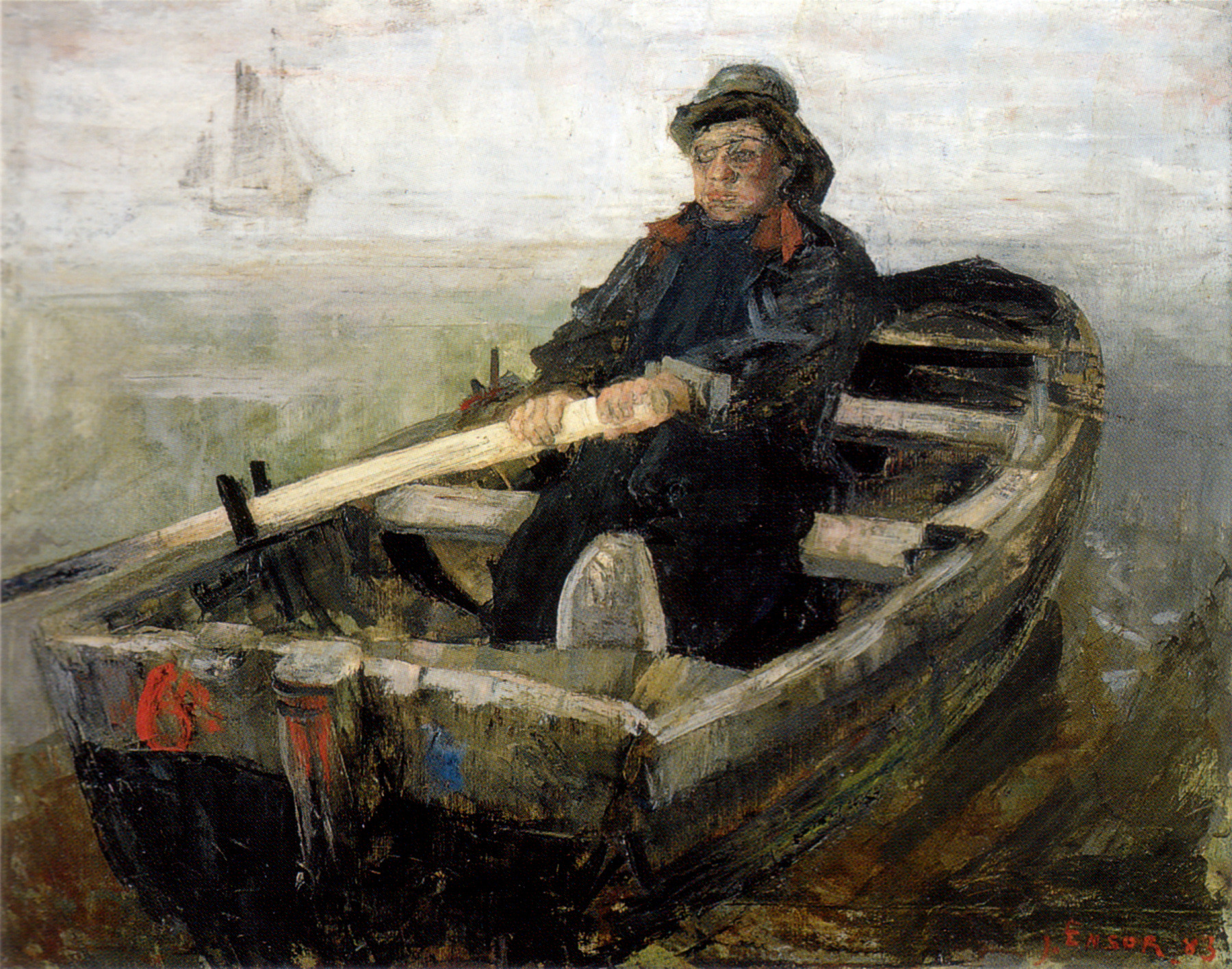
plate no. 3388
The Rower
James Ensor, 1883
study guide
est. 10 hrsapproach — 8 steps
- step 01
Lightly sketch the main shapes: the boat, the figure, and the horizon line.
- step 02
Block in the large areas of color: the sky, water, and the general tones of the boat and figure.
- step 03
Establish the darkest darks and lightest lights to create a sense of depth and form.
- step 04
Begin adding details to the boat, focusing on the texture and structure of the wood using visible brushstrokes.
- step 05
Refine the figure's features and clothing, paying attention to the way light and shadow define the form.
- step 06
Add the distant sailboat, keeping it soft and muted to suggest distance.
- step 07
Adjust the overall color harmony and value relationships to create a cohesive composition.
- step 08
Add final details and highlights to enhance the realism and visual interest.
color palette
primary · ivory black · raw umber · titanium white
secondary · cadmium red · ultramarine blue · yellow ochre
Mix various shades of gray and brown by combining black, umber, and white. Use small amounts of red and blue to create subtle color variations in the boat and figure.
techniques
- ·broken color
- ·scumbling
- ·dry brushing
- ·atmospheric perspective
- ·alla prima
common pitfalls
- →Overworking the details and losing the loose, impressionistic feel.
- →Failing to establish a strong value structure, resulting in a flat and lifeless painting.
- →Using colors that are too saturated, which can detract from the overall mood.
- →Neglecting the importance of atmospheric perspective in creating depth.
materials
surface · stretched canvas
required
- ·stretched canvas
- ·ivory black oil paint
- ·raw umber oil paint
- ·titanium white oil paint
- ·cadmium red oil paint
- ·ultramarine blue oil paint
- ·yellow ochre oil paint
- ·assorted brushes (round and flat)
optional
- ·palette knife
- ·linseed oil
- ·odorless mineral spirits
- ·painting medium
Use a medium-textured canvas to enhance the visibility of brushstrokes. Consider using a limited palette to simplify the color mixing process.
tips & new artworks in your inbox
no spam — unsubscribe anytime.
or to save artworks, chat, and track progress
related guides
in this vein


