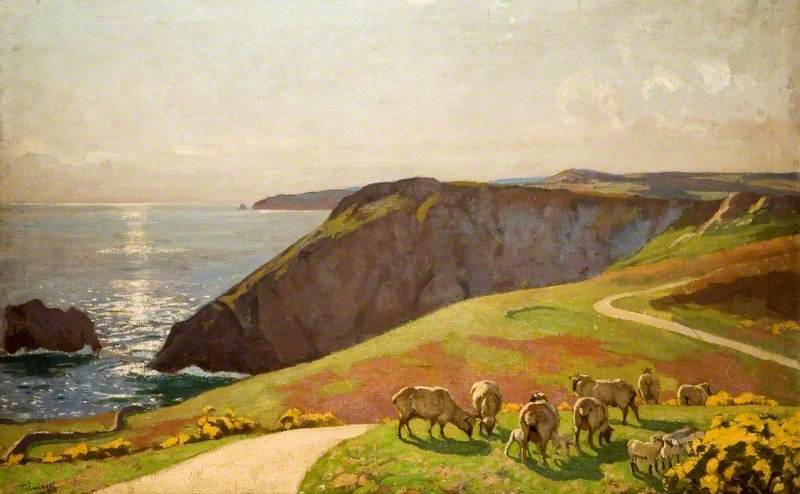
plate no. 2604
Sheep on Cliffs
study guide
est. 8 hrsapproach — 8 steps
- step 01
Sketch the basic composition, focusing on the placement of the cliffs, sea, and path.
- step 02
Block in the sky and sea with broad strokes, establishing the overall color and value.
- step 03
Add the basic shapes of the cliffs and land, using a mix of browns, greens, and yellows.
- step 04
Define the path with a lighter color, suggesting its winding form.
- step 05
Paint the sheep as simple shapes, paying attention to their relative sizes and positions.
- step 06
Add details to the cliffs, including shadows and highlights to create depth.
- step 07
Refine the colors and textures of the grass and vegetation.
- step 08
Add final details to the sheep, such as wool texture and subtle shading.
color palette
primary · ultramarine blue · burnt umber · yellow ochre · titanium white
secondary · cadmium yellow · alizarin crimson
Mix ultramarine blue and burnt umber for the darker areas of the cliffs and sea. Use yellow ochre and white for the path. Mix cadmium yellow and alizarin crimson for the flowers.
techniques
- ·atmospheric perspective
- ·broken color
- ·scumbling
- ·dry brushing
- ·blending
common pitfalls
- →Overworking the details and losing the overall impressionistic feel.
- →Creating colors that are too saturated and unrealistic.
- →Failing to establish a clear sense of depth and distance.
- →Making the sheep appear too stiff or unnatural.
materials
surface · stretched canvas
required
- ·stretched canvas (12x16 inches)
- ·oil paints
- ·palette
- ·palette knife
- ·assorted brushes (round and flat)
- ·linseed oil
- ·turpentine
- ·rags
optional
- ·medium gloss
- ·easel
- ·painting knife
Use a medium-grain canvas for best results. Consider using a limited palette to simplify color mixing.
tips & new artworks in your inbox
no spam — unsubscribe anytime.
or to save artworks, chat, and track progress
related guides
in this vein


