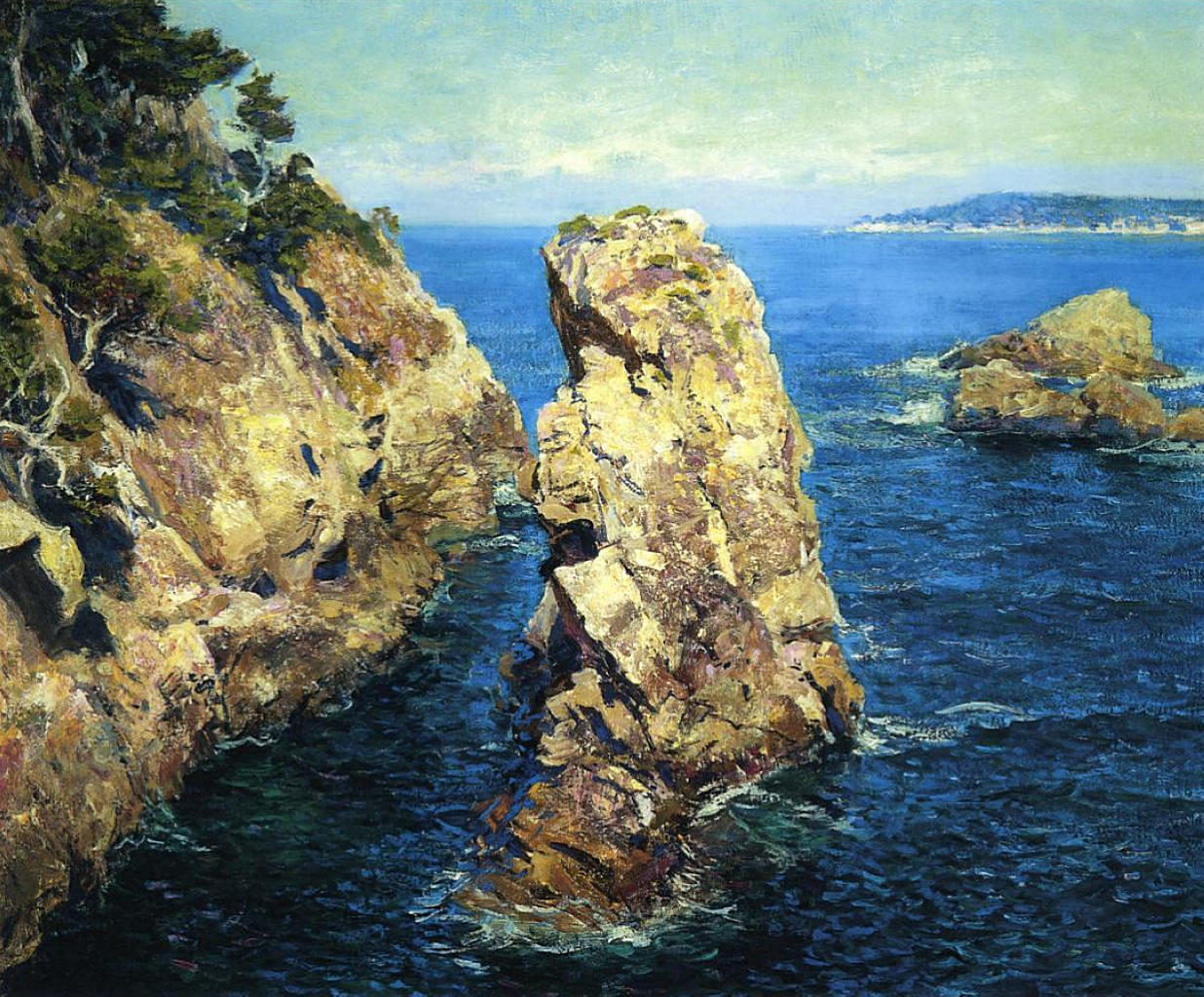
plate no. 1202
Point Lobos
study guide
est. 10 hrsapproach — 8 steps
- step 01
Sketch the basic shapes of the rocks, cliffs, and horizon line, paying attention to their relative sizes and positions.
- step 02
Establish the base colors for the sky and ocean using thin washes.
- step 03
Block in the main colors of the rocks and cliffs, focusing on the overall light and shadow patterns.
- step 04
Begin layering colors on the rocks and cliffs to create texture and dimension, using short, broken brushstrokes.
- step 05
Add details to the foliage on the cliffs, using a variety of greens and browns.
- step 06
Refine the colors and values in the ocean, adding highlights and shadows to suggest movement.
- step 07
Add small details like the whitecaps of the waves and the distant coastline.
- step 08
Make final adjustments to the colors, values, and details to achieve a cohesive and harmonious composition.
color palette
primary · ultramarine blue · yellow ochre · burnt umber · titanium white
secondary · viridian green · cadmium yellow · alizarin crimson
Mix various shades of blue and green for the ocean, using white to lighten the values. Create the rock colors by mixing yellow ochre, burnt umber, and white, with touches of red and blue for variation.
techniques
- ·broken color
- ·impasto
- ·scumbling
- ·layering
- ·wet-on-dry
common pitfalls
- →Overmixing colors, resulting in muddy tones.
- →Failing to establish a strong value structure.
- →Getting lost in details too early in the process.
- →Ignoring the overall composition and focus.
materials
surface · stretched canvas
required
- ·stretched canvas 18x24
- ·oil paints
- ·palette
- ·palette knife
- ·assorted brushes (round, flat, filbert)
- ·linseed oil
- ·odorless mineral spirits
- ·rags
optional
- ·painting medium
- ·easel
- ·varnish
Use high-quality oil paints for best results. A medium that promotes flow and blending can be helpful.
tips & new artworks in your inbox
no spam — unsubscribe anytime.
or to save artworks, chat, and track progress
related guides
in this vein


