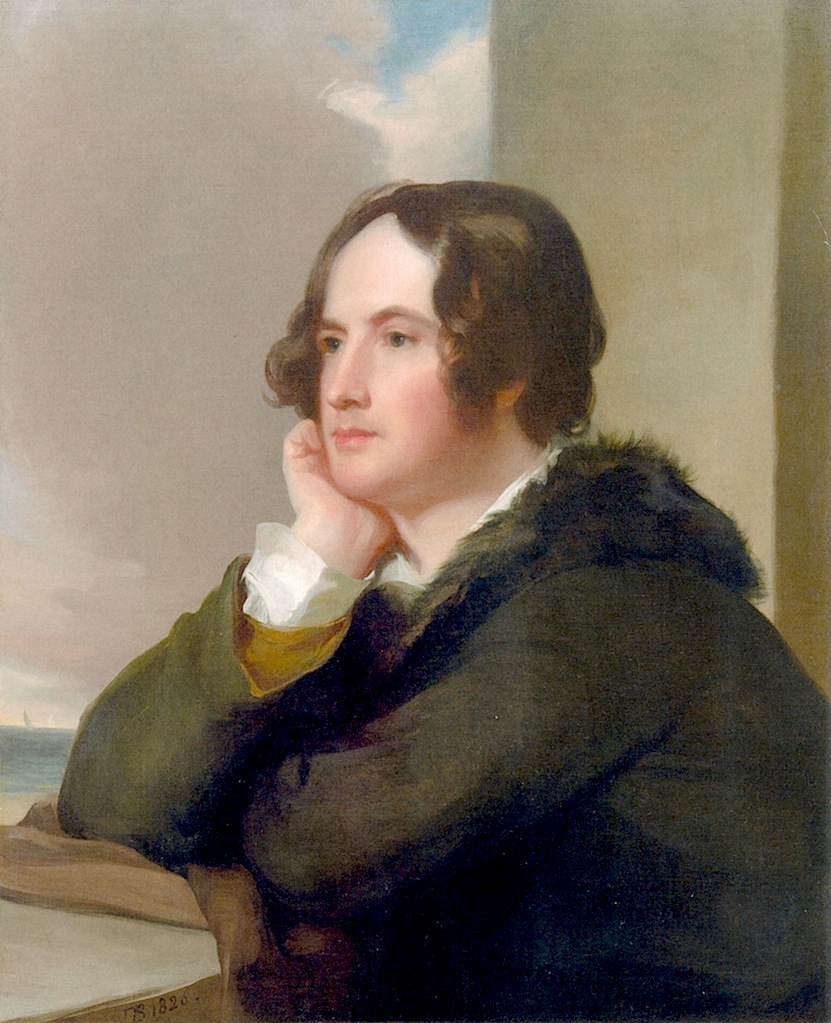
plate no. 0469
Nicholas Biddle
Thomas Sully, 1828
study guide
est. 15 hrsapproach — 8 steps
- step 01
Begin with a light sketch to establish the proportions and placement of the figure.
- step 02
Block in the main shapes and colors of the background, including the sky and column.
- step 03
Establish the basic skin tones and shadows on the face and hands.
- step 04
Start building up layers of color on the clothing, paying attention to folds and highlights.
- step 05
Refine the details of the face, including the eyes, nose, and mouth.
- step 06
Add details to the hair, capturing the highlights and shadows.
- step 07
Paint the details of the clothing, including the fur collar and the white shirt.
- step 08
Make final adjustments to the values and colors to create a cohesive and realistic portrait.
color palette
primary · titanium white · ivory black · raw umber · cadmium red light
secondary · yellow ochre · ultramarine blue · burnt sienna
Mix skin tones using titanium white, cadmium red light, yellow ochre, and a touch of raw umber and ultramarine blue. Achieve the dark clothing colors by mixing ivory black, raw umber, and a touch of ultramarine blue.
techniques
- ·portraiture
- ·glazing
- ·scumbling
- ·blending
- ·color matching
common pitfalls
- →Incorrect proportions of the face
- →Muddy skin tones
- →Overly harsh shadows
- →Lack of attention to detail in the clothing
materials
surface · stretched canvas
required
- ·stretched canvas 16x20
- ·#2 round brush
- ·#6 flat brush
- ·#10 filbert brush
- ·titanium white oil paint
- ·ivory black oil paint
- ·raw umber oil paint
- ·cadmium red light oil paint
optional
- ·palette knife
- ·linseed oil
- ·turpentine
- ·medium gloss
Use high-quality oil paints for best results. Pre-toned canvas with a thin wash of burnt umber can be helpful.
tips & new artworks in your inbox
no spam — unsubscribe anytime.
or to save artworks, chat, and track progress
in this vein
related artworks

Romantic Landscape
Karl Lessing

Self-portrait with his brother Francesco
Giuseppe Tominz

Oenone Refuse de Secourir Pâris au Siège de Troie
Léon Cogniet

Duke of Alba
Francisco Goya

Blick Aus Dem Wald Ins Tal
Andreas Achenbach

Young Girl Fixing Her Hair
Sophie Gengembre Anderson

The Plough Inn
William Shayer

Hudson River Landscape
Johann Hermann Carmiencke