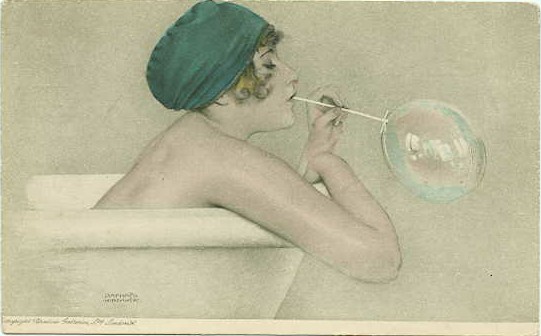
plate no. 5780
Bubbles
Raphael Kirchner, 1916
study guide
est. 12 hrsapproach — 8 steps
- step 01
Sketch the basic composition, focusing on the figure's pose and the bubble's placement.
- step 02
Establish the background with a light, neutral tone.
- step 03
Block in the main areas of the figure, paying attention to proportions and anatomical landmarks.
- step 04
Begin layering skin tones, starting with mid-tones and gradually adding highlights and shadows.
- step 05
Paint the swim cap using a mix of greens and blues, capturing its texture and folds.
- step 06
Carefully render the bubble, using light washes of color to create its translucent effect and highlights to show its roundness.
- step 07
Add details to the face, hair, and hands, refining the overall likeness.
- step 08
Make final adjustments to values and colors to create a cohesive and harmonious painting.
color palette
primary · titanium white · raw umber · yellow ochre
secondary · viridian green · ultramarine blue · cadmium yellow
Achieve skin tones by mixing white, umber, and ochre, adding small amounts of red or blue for warmth or coolness. Create the bubble's iridescence by layering thin washes of various colors.
techniques
- ·glazing
- ·scumbling
- ·soft blending
- ·rendering translucency
- ·portraiture
common pitfalls
- →overworking the skin tones
- →making the bubble look flat
- →inaccurate proportions
- →muddy colors
materials
surface · stretched canvas
required
- ·stretched canvas
- ·titanium white oil paint
- ·raw umber oil paint
- ·yellow ochre oil paint
- ·viridian green oil paint
- ·ultramarine blue oil paint
- ·round brushes sizes 2-6
optional
- ·palette knife
- ·linseed oil
- ·turpentine
- ·medium gloss
Use high-quality oil paints for best results. Pre-toned canvas can help to establish the overall color harmony.
tips & new artworks in your inbox
no spam — unsubscribe anytime.
or to save artworks, chat, and track progress
in this vein


