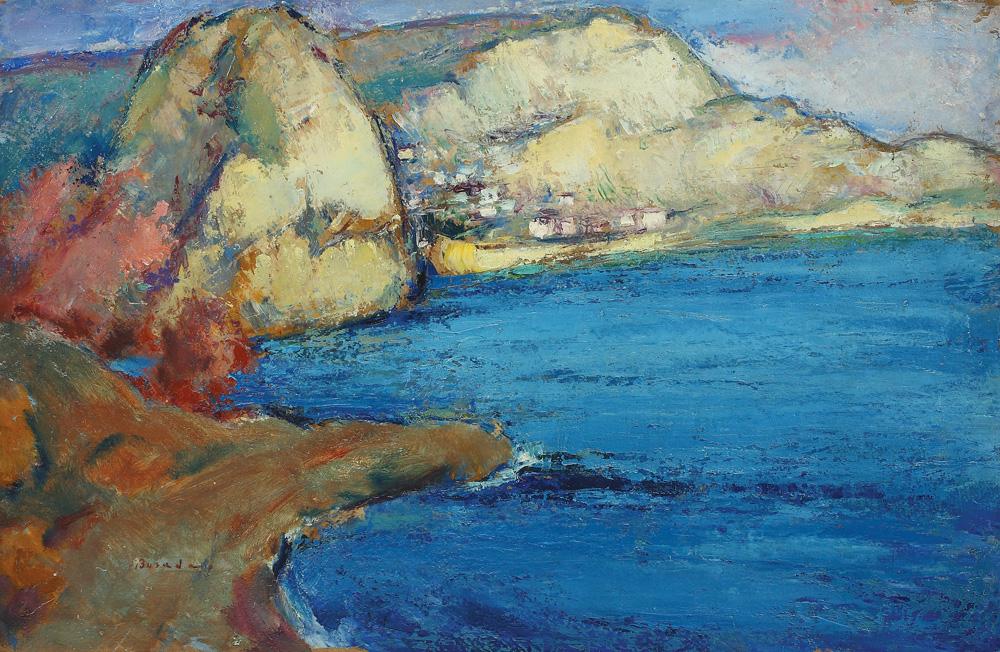
plate no. 2303
Balchik
study guide
est. 8 hrsapproach — 8 steps
- step 01
Sketch the basic shapes of the mountains, rocks, and sea, focusing on proportions and placement.
- step 02
Establish the horizon line and the general composition.
- step 03
Block in the main colors of the sea, sky, mountains, and rocks with broad strokes.
- step 04
Begin layering colors to create depth and dimension in the water, using darker blues in the foreground and lighter blues in the distance.
- step 05
Add details to the mountains, including the buildings and variations in color and texture.
- step 06
Develop the rocks in the foreground, paying attention to the interplay of light and shadow.
- step 07
Refine the details and add highlights to create a sense of realism.
- step 08
Add final touches and adjust colors as needed to achieve the desired effect.
color palette
primary · ultramarine blue · yellow ochre · titanium white
secondary · burnt sienna · cadmium yellow · alizarin crimson
Mix various shades of blue and green for the sea by combining ultramarine blue with white, yellow ochre, and a touch of burnt sienna. Achieve the mountain colors by mixing yellow ochre, white, and small amounts of burnt sienna and ultramarine blue.
techniques
- ·impasto
- ·broken color
- ·scumbling
- ·wet-on-wet blending
- ·color layering
common pitfalls
- →Overworking the painting and losing the freshness of the brushstrokes.
- →Failing to establish a clear value structure.
- →Using colors straight from the tube without mixing them.
- →Ignoring the importance of edges and transitions.
materials
surface · stretched canvas
required
- ·stretched canvas 18x24
- ·oil paints
- ·palette
- ·palette knife
- ·#4 round brush
- ·#8 flat brush
- ·linseed oil
- ·turpentine
optional
- ·painting medium
- ·easel
- ·rags
- ·varnish
Use a medium-textured canvas to enhance the impasto effect. Consider using a limited palette to simplify the color mixing process.
tips & new artworks in your inbox
no spam — unsubscribe anytime.
or to save artworks, chat, and track progress
related guides
in this vein


